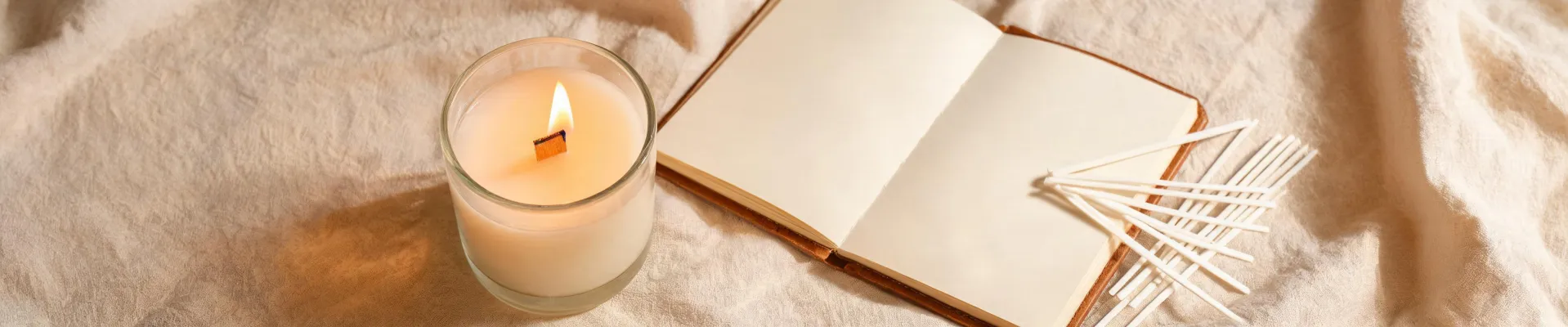
WoodWick Coffee Candle for Corporate Gifts: What a Quality Inspector Checks First
2026-08-10 / Elise Laurent
Here's the conclusion up front: a WoodWick coffee candle can be a genuinely good corporate gift, but not because of the scent name on the label. It works because the wooden wick creates an experience—the crackle, the warm flame, the way it smells like a room instead of a bottle. That experience only lands if the quality is right. In Q1 2024, I rejected nearly 7% of first-run samples for a custom order because fill weights varied by more than 2% between identical jars. That sounds picky until you see the alternative: a candle that looks expensive but burns like a promo item.
I don't say that to scare you. I say it because a corporate gift doesn't get a second chance. When a recipient opens the box, the candle is the anchor. If the wick is off-center, the flame smokes. If the wax is underfilled, it tunnels. If the scent is weaker than expected, they assume the whole brand is cut-rate. A quality inspector's job is to catch those issues before the gift ships.
What I check before approving a WoodWick candle for a corporate gift
My title is brand compliance manager, which is a polite way of saying I'm the person who says no before the client sees the prototype. I've reviewed home fragrance products since 2021—roughly 200 candle SKUs a year, maybe 240 if you count seasonal variants. I don't have the exact total in front of me (note to self: update the tracker), but the list below is the same one I use for every order, from a hundred pieces to a few thousand.
- The wick. In a WoodWick candle, the wooden wick should be centered, straight, and free of visible cracks. A leaning wick isn't cosmetic. It changes the burn pool, and a bad burn pool turns a premium gift into a glass full of soot.
- Fill weight. I weigh jars from multiple cartons, not just the first one. If a 9-ounce jar comes in at 8.6 ounces, someone is cutting costs in the wax. That's not a lab-technician detail; it's a measurable difference the recipient will notice halfway through the burn.
- Scent identity. For the WoodWick coffee candle, the coffee note should smell roasted, not like a caramel candy. We've tested coffee candles that were so sweet they'd work as dessert flavoring. That's fine as a consumer preference, but it's not the product the label promises.
- Vessel, lid, and label. A desk candle is also a desk accessory. The jar should feel weighty, the lid should fit flush, and the label should survive a damp loft or a shipping box. If those details are sloppy, the gift says 'walking invoice' instead of 'thank you.'
The same checklist applies if you're adding a votive candle to the gift set. Votives are a smart add-on because they're low-commitment: recipients can burn them in a bathroom or a small office without worrying about flame height. But votives fail faster if the wick isn't centered. We see more off-center wicks in small candles than in large jars, because the margin for error is smaller. Check a few before you commit to a full production run.
The five-minute test I use for any candle sample
Before I approve any candle for a corporate order, I do a short test that takes longer to describe than to run. First, weigh the candle with a small digital scale and write down the number. Then remove the lid and look down at the wick: it should sit in the center of the jar, not drift toward the edge. Then burn it for 20 minutes in a draft-free room. A WoodWick candle should light easily, crackle within a minute, and produce a melt pool that reaches the edges before you blow it out. Finally, smell the jar when it's cold and again when it's warm. If the cold scent is weak, the warm scent will likely be weak too.
That test has caught more problems than any product spec I've read. A vendor can say '100% cotton wick' or 'premium fragrance oil,' but the burn tells you whether they're telling the truth. For a WoodWick coffee candle, I'm especially interested in the first 10 minutes. That's when a wick that is too loose or too tight reveals itself.
Why Is Bone China Expensive? A Useful Lesson for Corporate Gift Buyers
If you've ever sourced promotional mugs, you've probably heard someone compare bone china to porcelain and wondered why the price gap is so wide. The question 'why is bone china expensive' comes up all the time in corporate gifting, and the answer is useful for candles too. Bone china contains bone ash—usually 25-50%, depending on the formula (Source: Encyclopaedia Britannica, accessed January 2025)—and it's fired at high temperatures in two stages. The process produces a lot of waste: a single bad batch can take down a whole kiln. So the higher price reflects materials and lost yield, not just a fancy name.
The same logic applies to the woodwick candle brand. A wooden wick has to be sliced to an exact thickness, dried to a target moisture content, and paired with a wax formula that works with its burn rate. If the wick is too thick, the flame gets tall. If it's too thin, it drowns. That's why WoodWick candles cost more than a plain jar candle: the wick is a manufactured component, not a string dipped in wax.
Years ago, 'wooden wick' was a gimmick you'd only see at craft fairs. That's changed. As of 2025, a reliable wooden wick needs precise thickness, moisture content, and channel design. It's an engineered detail, not a marketing afterthought. That's the same reason bone china is expensive: the product is only as good as the process behind it.
When I compared a WoodWick coffee candle and a cotton-wick coffee candle side by side (same scent family, similar burn time), I finally understood why the wooden wick matters. It's not just the crackle—though that's the part people remember. It's the way the wider flame moves the wax and releases the fragrance. I don't have the measured throw numbers anymore (this was back in 2022), but the impression stuck with me. That's why I tell corporate buyers to test the actual product instead of relying on a scent description.
Understanding these details does not make you a snob. It makes you a better buyer, and better buyers get better samples. I'd rather spend ten minutes explaining wick construction than sign off on a gift that misses.
When a less expensive candle is the right call
Not every corporate gift needs a premium candle. If you're doing 10,000 units for a conference and the goal is logo impressions, a budget votive candle or a simple wax melt might be the smarter use of budget. My advice about WoodWick applies to gifts that are meant to be kept: client thank-yous, welcome boxes, referral rewards, holiday gifts. In those situations, the candle is the emotional anchor, and a wobbly lid or a leaning wick ruins the message.
If you do choose a WoodWick candle, keep the rest of the gift quiet. A single candle, a branded matchbox, and a short handwritten note works better than a cluttered box. The candle should be the loudest element; if the logo is competing with the product, you've turned a gift into a promotional item.
Also, keep in mind that my experience is based on roughly 200 corporate gift orders, mostly in the 50-to-2,000-unit range. If you're sourcing for a luxury hospitality program or a mass retail promotion, your criteria will be different. I can't speak to those categories from direct experience, so work with someone who can.
One last thing: candle safety should be part of your quality checklist. In the U.S., candle suppliers should be able to show compliance with ASTM F2417, the standard for candle fire safety. If a custom vendor can't provide a certificate, that's a red flag no matter how nice the scent smells. And when you pass the gift along, tell the recipient to trim the wooden wick to about 1/4 inch before each burn. The National Candle Association (candles.org) recommends that as the single easiest way to avoid sooting. A little bit of care can make a WoodWick candle look even more thoughtful.

Elise Laurent
Elise Laurent is a crystal and decorative glass quality analyst covering crystal figurines, vases, ornaments, suncatchers, and gift glassware. She examines ISO 6486-1 where food-contact glass dinnerware applies, then uses polarized strain inspection, dimensional checks, surface-defect grading, and refractive clarity to compare decorative pieces outside that scope. Her work helps sourcing teams choose materials, finishing routes, and protective packaging without confusing visual brilliance with verified durability.