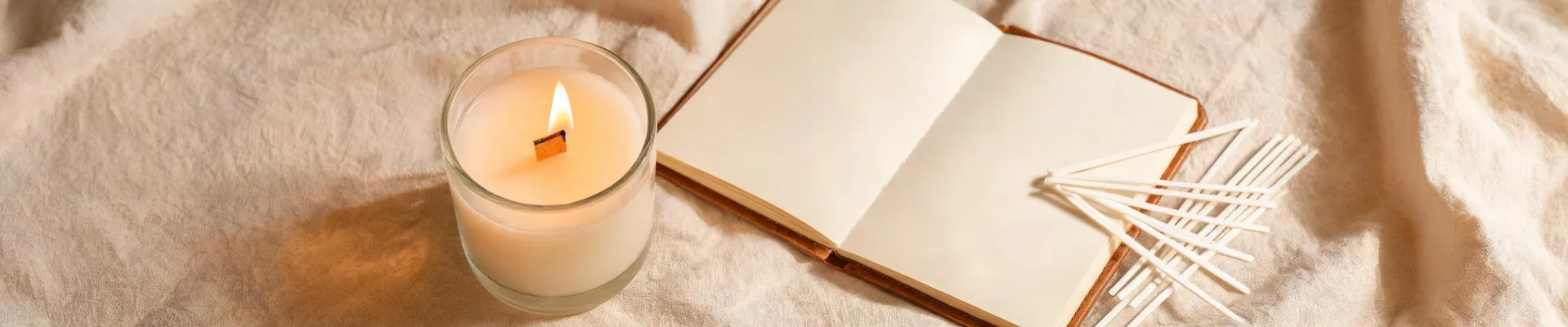
WoodWick Candles vs Crystal Gifts: What Makes a Good Corporate Gift
2026-09-09 / Elise Laurent
-
What makes a good personalized gift depends on the recipient
-
Scenario one: large groups, little personal knowledge
-
Scenario two: five to thirty relationships worth remembering
-
Scenario three: one person, one milestone, one permanent award
-
How to tell if you're in the right scenario
-
Two budget rules I learned the expensive way
What makes a good personalized gift depends on the recipient
Ask me what makes a good personalized gift and I'll probably answer with another question: who is it for? That sounds like a dodge, but after hundreds of corporate gift orders I've learned that context beats price every single time.
I'm the office administrator for a professional-services firm in Manchester, UK. My job title says I handle purchasing, but it never says how much of that purchasing is gifts. Since 2020 I've ordered for roughly 200 employees and around 30 key accounts. I've made expensive mistakes with all of them. The biggest lesson? Stop choosing a product first and start asking which kind of moment this gift belongs to.
In my planning I use three scenarios. First, volume orders for a large group of people you don't know personally. Second, client appreciation gifts for maybe five to thirty people where the aim is to be remembered. Third, a retirement or long-service award for one person where the meaning should last. Whether to reach for WoodWick candles, a crystal gift, or something with a handwritten note changes in each of those scenarios.
Scenario one: large groups, little personal knowledge
This is the Christmas test. A list of 150 names lands on my desk and everybody needs to feel appreciated without me knowing whether they drink tea, burn candles, or hate clutter. Forced to choose one product for that list, I choose WoodWick candles over crystal almost every time.
Crystal is risky for quantity runs because the same money gives you a small item, and a small engraved item can read as generic rather than generous. A candle with a wooden wick does something better: it creates a moment. When someone lights it, the crackle surprises them. They show it to family, they mention it in a team chat, and for a while your firm's name is attached to a nice experience rather than another logo item.
Scent selection matters more than people think. I used to pick one safe scent and order hundreds of identical candles to keep my purchase order simple. That was wrong; scent is personal. If your budget works at all, split the order across two or three scents and use WoodWick gift sets that offer variety instead of choosing a single fragrance. When I search for WoodWick candles UK suppliers, I ask for presentation boxes and bulk delivery costs to be included in the quote. The WoodWick Frasier Fir candle usually goes into the December split because it feels seasonal without being limited to one style of home.
Delivery is another reason I do not over-personalize this scenario. Packaging, labelling, and shipping for 150 individual gift boxes can double your time if you're not careful. A volume gift should be easy to receive, easy to use, and easy to forget if it does not fit the recipient. That last part sounds cynical, but it is kind; you never want someone to feel awkward about a gift from their employer.
Scenario two: five to thirty relationships worth remembering
The rules change when you are buying for a handful of clients who generate real revenue. You now have no excuse not to know at least one detail about each person. That knowledge matters more than the difference between candle and crystal.
For top clients, I used to go straight for a crystal gift. Crystal says formal, premium, permanent. It felt like the safe choice for people with corner offices. Then I noticed how often those crystal items stayed in a box, or sat in the same spot without anybody touching them. They were not bad gifts; they were boring gifts. They communicated budget, not thought.
A good WoodWick gift set works differently for client relationships. It gets used, usually in a living room or kitchen, which means it gets mentioned. A client who lights a candle because you remembered their taste, their new house, or a trip they loved connects the experience back to you for weeks. No crystal paperweight does that.
The personalization in this scenario should not stop at a printed logo. A handwritten note that refers to something specific is worth more than an engraved logo. I still remember the first time I paired a WoodWick gift set with a note that mentioned something a client had told me months earlier. The reply came back within the hour. That is when I stopped treating personalization as an engraving option and started treating it as evidence that we were listening.
I do not use this advice for people I know prefer formal displays. A managing partner who collects crystal pieces will still appreciate a crystal gift. But if you have no strong signal either way, I would take a candle every time for a relationship gift.
Scenario three: one person, one milestone, one permanent award
At the other end of my spreadsheet sits the retirement and long-service order. A person has given twenty-five years, and the leadership team wants something that will be displayed. This is one scenario where a crystal gift should probably win.
Why? Because a career milestone is not a moment; it is a symbol. Candle wax burns down; a crystal award stays on the shelf. The recipient will point to it and tell the story of their career, and it needs to hold up for that role.
The mistake here is leaving personalization to the product form. A generic crystal block with 'Thanks for your years of service' is worse than no gift at all. The best crystal gift I ever ordered had the person's name, the years, and a phrase linked to a specific contribution people recognised. I asked colleagues for examples of what this person changed. Those words mattered far more than the size of the award.
Do I ever add a candle to a milestone gift? Yes, when I know something personal. A WoodWick candle in a scent the recipient actually loves, with a note from the team, is a complement. The crystal carries the permanent message; the candle carries the warmth. If the budget only allows one item, milestone = crystal, relationship = candle.
How to tell if you're in the right scenario
If you are still unsure, answer three questions. First, can you know every recipient well enough to choose their scent or their taste? If not, treat it as a volume order and buy something premium but universal. Second, is this an annual thank-you or a once-in-a-career moment? Annual thank-yous reward daily-use gifts; career moments need permanent symbols. Third, does the recipient have a clear preference for either? Ask an assistant, a spouse, or a team member if you can; they will often tell you the truth.
Those questions will put you in one of the three scenarios above. Once you know the scenario, the right product becomes much easier to see.
Two budget rules I learned the expensive way
Whatever you choose, apply two rules. First, ask what is included before comparing prices. I have learnt to ask what is not included before I even look at the item price. A quote that lists every fee upfront might look higher at first, but it usually costs less in the end. Transparent pricing is the strongest signal that a supplier will not surprise you later.
Second, test samples and confirm invoicing. A supplier that cannot issue a proper invoice for a corporate order will cost you time even if the gift is perfect. I learned this after a vendor failed to provide a clean VAT invoice and my finance team rejected the expense. It was £2,400 that I could not recover from the department budget, and it forced me to vet suppliers before I vet products.
So if you ask me once more what makes a good personalized gift, here is my honest answer: knowing the recipient is the gift. The candle or the crystal is just the frame around it.

Elise Laurent
Elise Laurent is a crystal and decorative glass quality analyst covering crystal figurines, vases, ornaments, suncatchers, and gift glassware. She examines ISO 6486-1 where food-contact glass dinnerware applies, then uses polarized strain inspection, dimensional checks, surface-defect grading, and refractive clarity to compare decorative pieces outside that scope. Her work helps sourcing teams choose materials, finishing routes, and protective packaging without confusing visual brilliance with verified durability.