Why Holiday Gifts Fail Before They Ship: A Quality Inspector’s View on WoodWick, Ornaments, and Fine China
2026-09-16 / Elise Laurent
The problem you think you're solving
You ordered 500 holiday gift sets in September. They were supposed to arrive in October. Instead, you're looking at a pallet of candles with cracked jars, Christmas ornaments with scratched paint, holiday figurines that look nothing like the sample, and a line item called fine china that no one can explain.
Your first instinct is logistics. Bad freight. Bad luck. A rushed vendor.
I get it. I'm a quality and brand compliance manager at a corporate gifting company. I review every holiday SKU before it reaches a client—roughly 200+ units a quarter. Over four years of reviewing holiday gift SKUs, I rejected 18% of first deliveries in 2024 because of spec drift, scent inconsistency, and packaging damage. And I can tell you from experience: by the time the pallet arrives, the real problem started months earlier.
The deeper issue: you're buying a feeling, not a spec
Most B2B buyers focus on the obvious factors: unit price, lead time, and whether the product looks good on a PDF. They completely miss the spec language that determines whether the gift feels premium or cheap in someone's hands.
The question everyone asks is, 'Can you do this for $X per unit?' The question they should ask is, 'What exactly am I approving, and what happens when the factory's version isn't your version?'
Here's the thing: a corporate holiday gift is a brand artifact. It sits on a client's desk, gets photographed, gets talked about. A WoodWick Bonfire candle that smells weak, a Christmas ornament with a crooked hanger, or a holiday figurine with a chipped base doesn't just fail as a product. It fails as a signal. It tells the recipient your company doesn't sweat details.
And the deeper cause is almost never one bad factory. It's ambiguous specs, optimistic samples, and hidden cost structures that reward cutting corners after the PO is signed.
Where WoodWick-style candles trip up corporate orders
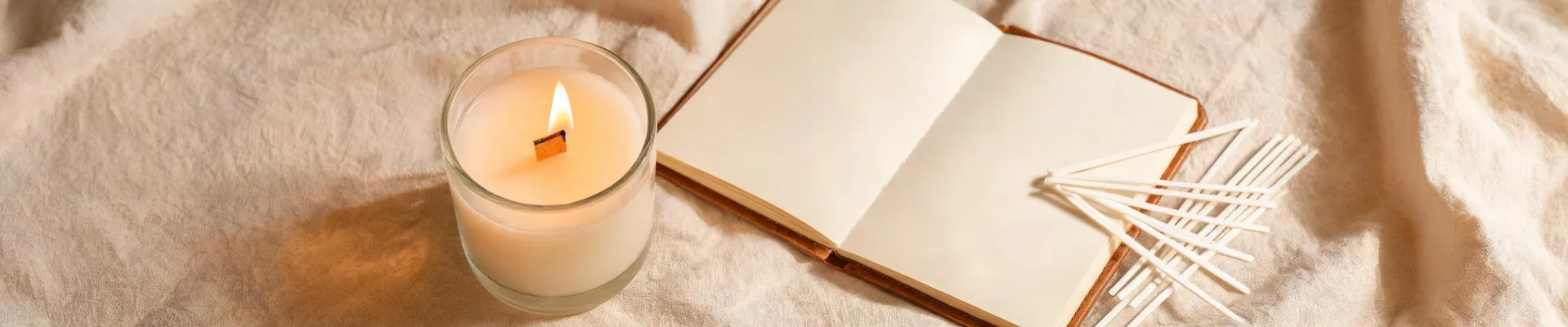
Let's start with candles, because they're deceptively complex. If you're sourcing WoodWick candles—or any wooden-wick candle—for corporate gifting, you're dealing with variables that don't show up on a one-page sell sheet.
Wax blend, wick treatment, jar size, fragrance load, cure time, and shipping temperature all affect the final experience. A woodwick bonfire candle is a popular choice because the crackling wick and smoky-sweet scent profile feel distinctive. But that same product can arrive with a weak cold throw, a tunneling burn, or a wick that won't stay lit. Why? Because the factory ran a different wax lot, or the candles sat in a hot container, or the wicks weren't properly dried.
Here's where buyers get into trouble: how long do woodwick candles last? The honest answer is that it depends. Published burn times are usually based on controlled conditions—trimmed wick, no draft, short burn sessions. A large jar might be listed in the 100+ hour range. A small votive might be 10-15 hours. Neither number survives a client who leaves the candle under an air vent and never trims the wick.
Don't promise a burn time. Promise a tested range for your specific SKU, and verify it with your own burn test before the order ships.
I dodged a bullet when I double-checked the burn spec before approving a 2024 holiday order. We were one email away from promising 60-hour burn time on a 3-oz sample that realistically ran closer to 12 hours in normal use. The vendor said it was 'within industry standard.' We rejected the spec sheet and rewrote it.
What to put in the candle spec instead
- Fragrance load percentage and cold throw vs. hot throw requirements.
- Wick material and treatment, plus a burn test protocol.
- Jar dimensions, glass thickness, and crack tolerance.
- Maximum shipping temperature and packaging drop test.
- Burn time range—not a single number—based on your test.
The same pattern shows up in ornaments, figurines, and fine china
Christmas ornament orders fail for the same reason candle orders fail: the spec is too vague. 'Premium ornament' means nothing. 'Hand-painted holiday figurine' means nothing. 'Fine china' definitely means nothing without a material breakdown.
Most buyers focus on the product photo and completely miss the mold wear, paint tolerance, and packaging clearance. A resin holiday figurine can look perfect in a sample and arrive with dull eyes, chipped fingers, and a base that doesn't sit flat. A Christmas ornament can have a hanger that pulls out under the weight of the box. And if you're using metallic paint, the color can shift from warm gold to greenish gold depending on the batch.
Color is measurable. Industry standard color tolerance is Delta E < 2 for brand-critical colors. Delta E of 2-4 is noticeable to trained observers; above 4 is visible to most people. Reference: Pantone Color Matching System guidelines. If your ornament or packaging color matters, put a Delta E tolerance in the contract. Don't just say 'match the sample.'
Then there's where did fine china come from? The term 'fine china' traces back to porcelain made in China—specifically kaolin-based porcelain that Europeans later tried to replicate. English bone china, developed in the late 1700s, added bone ash to the formula. Today, suppliers use 'fine china' to mean everything from bone china to porcelain to stoneware to white ceramic. If a vendor can't tell you the material, the bone ash percentage, the origin, and the food-contact safety standard, you're not buying fine china. You're buying a word.
The real cost of a bad gift
The first cost is obvious: redo. In 2023, we received a batch of 8,000 holiday figurines where the paint was visibly off—Delta E around 5 against our approved Pantone shade. Normal tolerance was under 2. The vendor claimed it was 'within industry standard.' We rejected the batch, and they redid it at their cost. That quality issue cost us a $22,000 redo and delayed our launch by three weeks.
The second cost is hidden. Rush production premiums usually run +50-100% over standard pricing for next-business-day turnaround, and +25-50% for 2-3 days, based on major online printer fee structures in 2025. That's just packaging and insert cards. Add air freight, replacement units, and the labor to re-kit 500 gift sets, and the 'cheap' vendor isn't cheap anymore.
For our 50,000-unit annual holiday order, a 1% defect rate is 500 unhappy clients. The third cost is the one nobody puts in the spreadsheet: trust. A client who receives a cracked candle jar or a chipped ornament doesn't blame the factory. They blame you. And that trust is a lot harder to reorder than wax.
What actually works (short version)
I'm not going to pretend this is complicated. The fix is mostly discipline.
- Write a real spec. Dimensions, materials, color tolerance, fragrance load, burn test, drop test, packaging clearance. If it's not measurable, it's not a spec.
- Approve a golden sample—and seal it. Keep one unit in the office and one at the factory. The factory's comparison should be against the sealed sample, not memory.
- Ask for total landed cost. Unit price, setup, rush fees, freight, duties, replacement policy. I've learned to ask 'what's NOT included' before 'what's the price.' The vendor who lists all fees upfront—even if the total looks higher—usually costs less in the end.
- Run an AQL inspection before shipment. Not after the pallet hits your warehouse. Catching a wick problem in China is cheaper than catching it in Ohio.
- Test the burn and the drop. For candles, burn at least three units for the full advertised duration. For ornaments and figurines, drop-test the master carton from 30 inches.
When I implemented our verification protocol in 2022, first-pass rejects dropped by 31%. The protocol wasn't fancy. It was just a signed spec, a sealed sample, and a burn/drop test before shipment.
One context note
This worked for us, but our situation was a mid-size B2B gifting company with predictable holiday orders and domestic fulfillment. Your mileage may vary if you're a seasonal business with demand spikes, or if you're shipping internationally and dealing with customs and different safety standards.
I can only speak to the categories I review. If you're sourcing WoodWick candles, Christmas ornaments, holiday figurines, or fine china, the principle is the same: the product is not the product. The spec is the product. Everything else is just hope in a box.

Elise Laurent
Elise Laurent is a crystal and decorative glass quality analyst covering crystal figurines, vases, ornaments, suncatchers, and gift glassware. She examines ISO 6486-1 where food-contact glass dinnerware applies, then uses polarized strain inspection, dimensional checks, surface-defect grading, and refractive clarity to compare decorative pieces outside that scope. Her work helps sourcing teams choose materials, finishing routes, and protective packaging without confusing visual brilliance with verified durability.