How Do Promotional Products Work? A Quality Inspector's 7-Step Checklist
2026-08-10 / Elise Laurent
-
1. Put your specifications in writing (no, seriously, everything)
-
2. Order a pre-production sample—then abuse it
-
3. Check the packaging and label like a lawyer
-
4. Do a shipping simulation (the step everyone skips)
-
5. Ask for a transparent cost breakdown—including what's not included
-
6. Agree on a defect policy before you order
-
7. Plan for seasonality—especially for holiday gifts
-
Common mistakes (avoid these)
So you're in charge of ordering promotional products for your company. Maybe you've settled on scented candles—specifically WoodWick products, because the crackling wooden wick is a nice conversation starter for clients. Or maybe you're looking at wax melts as a lower-cost giveaway.
I'm a quality/compliance manager at WoodWick. I review every single deliverable that goes out to customers—roughly 200+ unique items a year. In 2024, I rejected about 12% of first deliveries because of things like misaligned labels, off-scent batches, and wooden wicks that cracked during transit.
The question I hear from B2B buyers is always the same: how do promotional products work beyond the catalog photo? This checklist is what I wish someone had handed me before I saw my first bulk order fail.
1. Put your specifications in writing (no, seriously, everything)
The number one mistake I see is that buyers rely on the product description on a website. "Woodwick fireside candle" sounds clear, but it doesn't tell the vendor exactly what you need. You need to define the wax blend, the fragrance load, the wick size, the label material, the box style, the ink colors, and the minimum batch quality.
For example, for WoodWick fireside candles, the spec shouldn't just say "wooden wick." It should say: a 3-inch flat wick made from FSC-certified wood, free of splinters, sitting slightly above the wax surface. You'd be surprised how many woodwicks come bent or charred on arrival.
One more thing: specify how you'll measure quality. Burn rate? Scent throw? Melt pool size? Write those numbers down. If you don't, the vendor will choose their own—and that's not necessarily what you want.
2. Order a pre-production sample—then abuse it
A glossy mockup tells you nothing about how the product will perform. You need a physical sample. But not just the sample they send you in a neat gift box. You need to test it like a customer.
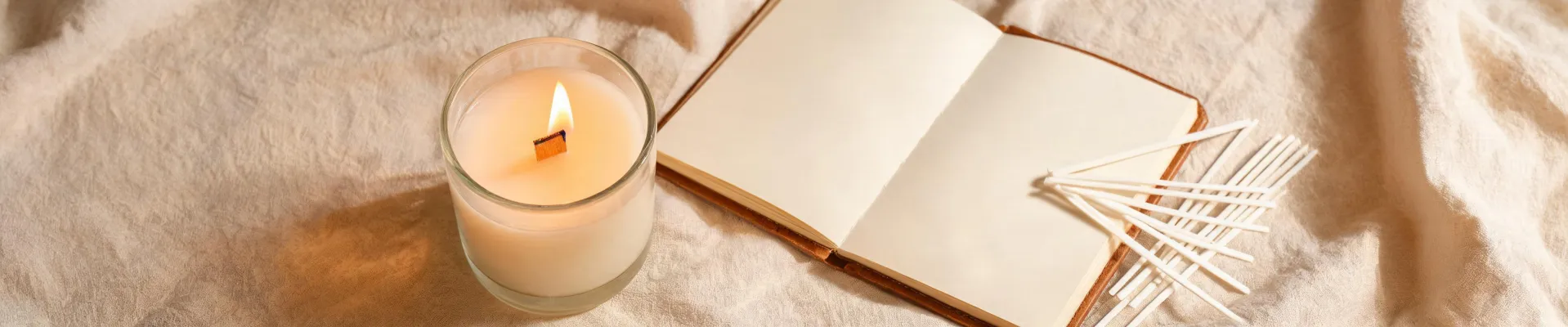
Burn the candle for four hours. Does the wick crackle without smoking? Put the wax melt on a warmer. Does it fade away in two days? Write down how it feels. In our testing, WoodWick humidor wax melts have a specific caramel-vanilla scent that's strong at first and then settles.
At one point, I assumed that because our lab had "approved" a sample, the production would be identical. Nope. The production batch used a slightly cheaper fragrance oil because of a supplier change. That's why the sample is just the beginning.
3. Check the packaging and label like a lawyer
This is the step that separates pros from amateurs. For candles, there are warning labels, ingredient lists, and safety instructions. For wax melts, you need to list the wax type and fragrance allergens—especially in the EU.
And then there's print quality. Ask your vendor to print the artwork on the actual label paper. Verify the colors against the Pantone system. Industry standard tolerance is Delta E < 2 for brand-critical colors. If the logo on the candle jar is even a shade off, it's noticeable.
Print resolution matters too: 300 DPI at final size for commercial offset. I've seen promo suppliers send low-res PDFs and claim they're "print ready." They aren't.
4. Do a shipping simulation (the step everyone skips)
Real talk: I don't know any first-time buyer who tests how a product survives shipping. They all find out the hard way.
Here's a quick test: put your candle in a box with the same packaging you'll use for bulk shipping. Shake it. Leave it in a hot car for an afternoon. Put it on its side for 48 hours. If the wooden wick shifts, or the glass jar has tiny chips you didn't see, that's a problem.
Our team saw a batch of WoodWick humidor wax melts arrive at a client's warehouse with melted labels because they had been stacked near a heating vent during transit. The client almost canceled the whole order. A shipping sim would've caught that.
5. Ask for a transparent cost breakdown—including what's not included
I used to think rush fees were just vendors trying to squeeze money. Then I learned what happens when you ask a factory to skip the line: they have to pull people off other jobs, run overtime, and expedite freight. That's real.
But that doesn't mean you should accept vague quotes. When you get a price, ask: "What's NOT included?" Hidden costs like setup fees, plate fees, Pantone matching, rush premiums, and shipping insurance can turn a "cheap" unit price into a budget buster.
The vendor who says "our total price covers everything" is more trustworthy than the one who shows a low price and adds fees later. I've seen both.
6. Agree on a defect policy before you order
What happens if 5% of your candles arrive with cracked glass? What about 10% waxy mess? You need to agree on a defect rate that's acceptable—and what the vendor will do about it.
My rule: anything above 2-3% cosmetic defects is a batch failure. And the vendor should either reprint at their cost or credit you. I learned this after assuming "same specifications" meant identical results across vendors. It didn't. The second vendor's idea of "wooden wick" was a crooked piece of balsa wood.
Get the defect policy in writing. A handshake isn't enough when you're moving thousands of units.
7. Plan for seasonality—especially for holiday gifts
If you're thinking about ordering a nativity set or holiday candle gifts, start now. The candle industry's peak season is August through November. If you order in October, you'll be paying premium prices or missing your window entirely.
I don't have hard data on how many corporate gift orders arrive after Christmas, but based on my years in quality, it's more than you'd think. One of our clients ordered a custom batch of candles for their client appreciation event in early December. They submitted the order on November 15th. That's a nightmare.
Even if you're doing wax melts or reed diffusers as a non-holiday promo, lead times matter. Custom packaging can take 6-8 weeks. Labels take 2-3 weeks. Samples take 1-2 weeks. Add that up.
Common mistakes (avoid these)
Look, I'm not saying every vendor is out to get you. Most are honest. But the ones that slip through cause real damage.
- Assuming the proof represents the final product. Proofs are made under ideal conditions. Production is not.
- Skipping the burn test because "the sample looked fine." The burn test reveals how the product behaves in real life.
- Not tracking quality data over time. Your first order might be great, the third one might not. Keep records.
- Choosing the cheapest quote without asking about hidden fees. A lower upfront price often ends up more expensive.
At the end of the day, how do promotional products work is really about: what does your product do to your brand's reputation? A slightly higher upfront cost for a supplier who's transparent about specs and processes is a better deal than a cheap one that ruins your name.

Elise Laurent
Elise Laurent is a crystal and decorative glass quality analyst covering crystal figurines, vases, ornaments, suncatchers, and gift glassware. She examines ISO 6486-1 where food-contact glass dinnerware applies, then uses polarized strain inspection, dimensional checks, surface-defect grading, and refractive clarity to compare decorative pieces outside that scope. Her work helps sourcing teams choose materials, finishing routes, and protective packaging without confusing visual brilliance with verified durability.