200 Blank Jars, 96 Hours, and a Fibre Laser: Rescuing the Holiday Candle Order
2026-08-07 / Elise Laurent
It was 11:42 PM on a Tuesday when I saw the email that killed my evening. Our client's holiday gala was in five days, and the 200 custom WoodWick candle gift sets they'd paid $12,000 for were sitting in a warehouse—engraving missing. The vendor had confirmed the art was done. The proof was approved. The jars were just blank.
In my role coordinating corporate gifting for B2B clients, I've handled my share of emergencies. Last quarter alone, we processed 47 rush jobs with 95% on-time delivery. But this one felt different. This wasn't about speed. It was about trust.
The Setup: A Perfect Order Gone Wrong
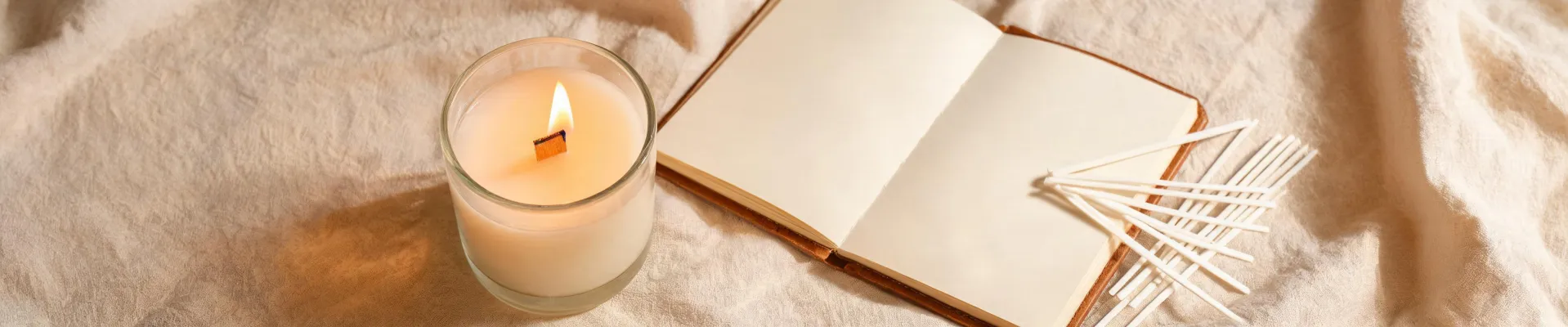
The client originally ordered 200 premium gift sets: a large WoodWick scented candle in a frosted jar, a small holiday figurine, and a matching votive candle—all wrapped in a branded gift box. WoodWick, for those who haven't encountered it up close, is a brand under the Yankee Candle Company umbrella, but it's distinct in one major way: the wooden wick. It crackles like a tiny fireplace while it burns. That sound alone makes it a premium experience—more sensory, more memorable.
We'd specified lavender-scented jars for most recipients, with an unscented WoodWick candle set aside for a smaller group. Not because we skimped on the scent variety. Because a few of the client's VIP guests had fragrance sensitivities. The client loved that touch: "It shows you think about the person on the other side."
The one part of the order we outsourced was the custom logo engraving on the jars. Our primary supplier didn't offer glass engraving, so we'd gone with a discount vendor who quoted 30% below anyone else. Fast, cheap, good—you know the old saying about picking two.
The vendor's sales team confirmed the order. The production team never received the engraving file. When the crate arrived at our warehouse, it was full of pristine, completely unengraved glass jars. I stared at them for a moment, thinking about the client's name and the check they'd written.
The Panic: 96 Hours to Go
Missing that deadline would have triggered a $5,000 penalty clause in our contract—and, worse, the permanent loss of a client we'd worked with for three years. Their annual spend was over $40,000 across multiple events. Not a risk I wanted to explain to my boss.
I knew I should have verified the engraving earlier. But the vendor had come through for us before, and I thought, "What are the odds they drop the ball on the largest order we've given them?" Well. The odds caught up with me.
So what do you do when 200 glass jars need custom engraving and you have four days?
The discount vendor's solution? "Three weeks, maybe." I hung up mid-sentence.
The next call was to Marcus, the owner of a local custom shop we'd used once for a trade show sign. He listened without interrupting, then said: "Bring the jars over. We've got a fibre laser cutting machine that can handle glass engraving. I'll have a test sample for you in two hours."
How Does a Fibre Laser Cutting Machine Work?
Full disclosure: before that night, I couldn't tell a CO2 laser from a fibre laser. Marcus explained it in a way that stuck with me—and honestly, it changed how I evaluate vendors for custom work.
The short version: a fibre laser cutting machine uses a focused beam of light generated through fiber-optic technology to mark or cut materials. Unlike CO2 lasers, which rely on a gas mixture and are typically better suited to organic materials like wood or acrylic, fibre lasers operate at a wavelength around 1.06 micrometers. That shorter wavelength lets the beam be absorbed more efficiently by metals and, with careful settings, glass.
"Glass engraving is all about heat management," Marcus said, pointing at a test piece he'd finished while we talked. "Too much power and you get micro-cracks. Too little and the engraving washes out. The fibre laser delivers energy in precise, controlled bursts. That's what makes it possible."
He handed me the sample: our client's logo, etched cleanly into the frosted glass. It looked exactly like the proof we'd approved. Seeing the plain jar next to the engraved one, side by side, I finally understood what I'd missed. The engraving was never a minor detail. It was the custom touch that made a $60 candle feel like a $120 gift.
The Execution: 36 Hours of Laser Engraving
Marcus quoted $1,800 for the rush job—200 jars, logo engraving, delivery to our warehouse. Six hundred more than the discount vendor's original quote for the entire engagement. I said yes without hesitation. We paid $1,800 in rush fees on top of the $3,200 we'd already lost on the failed vendor. Total damage: $5,000. But the alternative was a $12,000 order disappearing. Worse, a client relationship that was worth four times that annually.
He delivered in 36 hours. Not 48. 36.
The final batch was flawless. Same depth, same alignment, same subtle frost on every single jar. Our team assembled the gift sets: the lavender WoodWick candle in its engraved jar, the holiday figurine nestled beside it, the votive candle wrapped in branded tissue, all closed in a matte black gift box with the client's logo.
The client's CEO received the delivery two days before the event. She sent a one-line email: "These are perfect."
The Lessons: What We Learned
Everyone tells you to verify vendors. I only believed it after ignoring that advice and eating a $5,000 mistake. Since then, we've added three checkpoints to every custom order: a production photo before shipping, a tracking notification, and a final inspection on arrival. Small steps. They cost almost nothing.
And I've become somewhat obsessed with understanding when a cheaper vendor is actually a bargain and when it's a trap. The discount vendor's quote was $2,600 for everything. The rush laser job was $1,800. But the reprint, the penalty risk, and three sleepless nights cost us another $3,200. When I compared the total cost side by side, the "cheap" option was 80% more expensive than the "premium" one. That math still stings.
Online printers and engravers work well for standard products, established designs, and normal turnarounds—you can't beat their pricing at scale. But for rush jobs with custom specifications, local shops with specialized equipment are genuinely a different category. Marcus's fibre laser cutting machine accomplished in 36 hours what our national vendor couldn't in three weeks. Not because they're incompetent. They're just built for a different type of work.
An Honest Limitation
I recommend local laser shops for custom engraving, but they're not the right answer for every order. If you need 5,000 pieces with the same design and you have three weeks of lead time, a large-scale online engraver will probably win on price. If you need same-day or 48-hour turnaround on custom glass, go local. There's no universal best—just the right tool for the situation.
"The value of guaranteed turnaround isn't the speed—it's the certainty. For event materials, knowing your deadline will be met is often worth more than a lower price with 'estimated' delivery."
That quote is now written into our operations manual. We paid $1,800 in rush fees and lost $3,200 on a failed vendor. But we saved a $12,000 project and kept a customer. The client's alternative would have been 200 gift bags with blank jars and an apologetic card. Instead, they had perfect, premium WoodWick gift sets delivered two days ahead of the gala.
The Bottom Line
If you're ordering custom candles for corporate events—or any custom product, honestly—build in a buffer. Our company policy now requires a 48-hour buffer before the client's deadline, and we don't waive it for anyone. That policy exists because of what happened with this order.
And if you ever find yourself staring at a warehouse full of unengraved glass jars with days to go, find a local shop with a fibre laser cutting machine. It's sort of incredible what they can do.
But don't wait until the last minute to find out. Simple.

Elise Laurent
Elise Laurent is a crystal and decorative glass quality analyst covering crystal figurines, vases, ornaments, suncatchers, and gift glassware. She examines ISO 6486-1 where food-contact glass dinnerware applies, then uses polarized strain inspection, dimensional checks, surface-defect grading, and refractive clarity to compare decorative pieces outside that scope. Her work helps sourcing teams choose materials, finishing routes, and protective packaging without confusing visual brilliance with verified durability.