Hidden Quality Costs More: A Corporate Gift Inspector's Case for Transparency
2026-08-11 / Elise Laurent
-
The Surface Illusion: "Looks Fine" vs. "Works Right"
-
Save a Dollar, Lose a Client: What "Cheaper" Actually Costs
-
What I Actually Check: A Quality Inspector's List
-
It's Not Just Candles: Crystal Gifts and Diamond Painting Kits Have the Same Hidden Risks
-
The Counter-Argument: "Our Clients Don't Inspect Gifts"
-
Transparency Is the Foundation of Trust
Here's a confession from four years as a quality and compliance manager for a home fragrance and gift company: the corporate gift that damages your brand isn't the cheap one—it's the gift with a hidden defect that surfaces only after delivery.
I review every product before it goes to corporate gifting programs. Roughly 200-plus SKUs each year—maybe a few less, I'd have to check the system. And in Q1 2024, I rejected 12% of the first production runs we received. To the untrained eye, those products looked perfect. I knew better.
The Surface Illusion: "Looks Fine" vs. "Works Right"
From the outside, corporate gifting looks like a simple transaction—pick a product, add a logo, hand it out. The reality is that quality issues hide where nobody thinks to look.
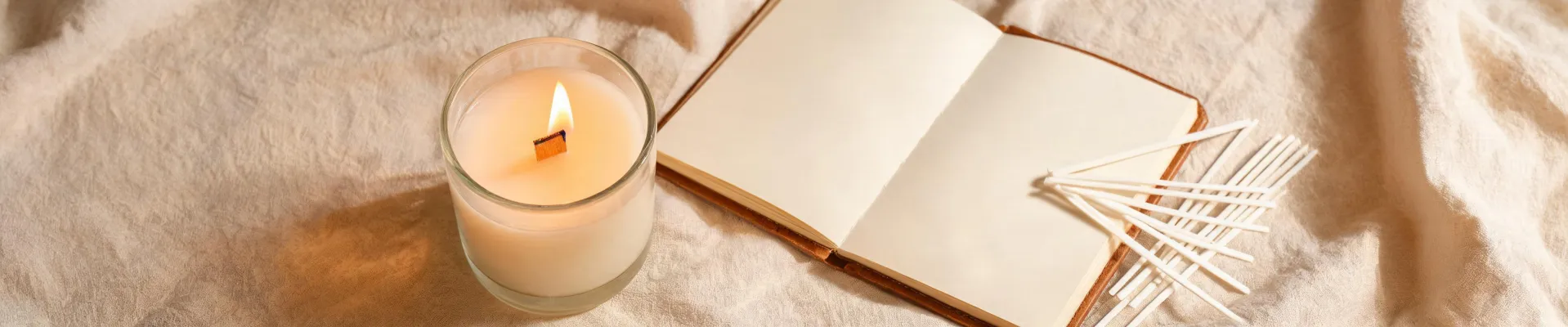
Take the WoodWick candle medium Frasier Fir 92175E, one of our most requested corporate gifts. On the outside, it's a beautiful candle in a glass jar with a wooden lid. But the real product isn't the jar—it's the experience: the crackle of the wooden wick, the scent throw, the burn quality. (Which, honestly, is what recipients remember.)
People assume that if the packaging is intact, the candle inside is fine. What they don't see is what happens when the wick was installed slightly off-center or the fragrance oil wasn't blended evenly before pouring. The candle looks great for weeks and then betrays you on first lighting.
Save a Dollar, Lose a Client: What "Cheaper" Actually Costs
Budget is always the first conversation in corporate gifting. I get it. But I've seen the "budget choice" backfire too many times to stay quiet about it.
In 2023, a corporate buyer chose a lower-cost supplier over a more rigorous one for a 500-unit candle order. The unit savings were about $4 per candle—roughly $2,000 total. Seemed smart until the first batch arrived with lids that didn't seal properly. Wax leaked during shipping. The warehouse flagged it within hours. The order had to be redone in 9 days (rush fees included). Total cost: $4,800. And that's not counting the client's lost confidence.
That's the classic pattern: saved $2,000 on the front end, spent $4,800 on the back end. The "budget vendor" choice looked smart until it definitely didn't.
Based on market pricing data published in industry catalogs (January 2025), medium wooden-wick candles in premium fragrances typically range from $14-$22 per unit in wholesale quantities. Verify current pricing before budgeting. But the point stands: a two-dollar difference in unit price is nothing compared to a failed delivery.
What I Actually Check: A Quality Inspector's List
Here's a quick look at the inspection process for a WoodWick candle medium Frasier Fir 92175E—the same process we apply to any product in our corporate gifting catalog:
- Wick function test. I light it. I listen for the crackle. I measure burn time and check for even melting. If the wick doesn't perform, the candle doesn't ship.
- Fragrance consistency. I compare scent strength from the top of the jar to the bottom. Frasier Fir should smell like a forest, start to finish, not like a forest in the first half and weak wax in the second.
- Label and packaging integrity. Label adhesion, lid fit, shrink wrap—the first things recipients see. A peeled label or loose lid instantly cheapens the product.
- Batch consistency. I pull 3-5 units from each production run and compare them side by side. Color variation, jar fill level, even lid alignment—all within a tight tolerance.
That's what real quality checking looks like. A vendor who lights one candle and eyeballs the rest isn't doing quality control—they're doing a hope ritual.
It's Not Just Candles: Crystal Gifts and Diamond Painting Kits Have the Same Hidden Risks
I've seen this pattern across the entire gifting industry, not just fragrances. Two categories deserve special mention: crystal gifts and diamond painting kits.
Crystal gift items—paperweights, bookends, decorative sculpture—are prone to internal micro-fractures. The issue is nearly invisible during normal handling. But place the piece under office lighting, and the fractures catch light like tiny lightning bolts. We once inspected a batch of 8,000 crystal paperweights with this exact flaw. Every single unit passed the "looks fine in a box" test. All of them failed the "on someone's desk" test.
And with diamond painting kits? The question I hear most often from clients is, "does diamond painting glue dry out?" Yes, it does. The adhesive layer on diamond painting canvases has a shelf life. If a vendor holds inventory for 12 to 18 months, the glue loses tackiness. The receiver opens the kit, places a few diamonds, and watches them fall off the canvas within days. We now require adhesive freshness guarantees in our contracts for any craft-related gift product.
The common thread: every product category has its hidden failure mode. A quality inspector's real job is knowing where those failure modes hide before the product reaches your client.
The Counter-Argument: "Our Clients Don't Inspect Gifts"
To be fair, I hear this from buyers more often than you'd think. Our clients won't test candle burn times or inspect crystal for fractures. And you're probably right.
But recipients do use the gift. They light the candle at dinner. They put the paperweight on their desk. They try the diamond painting kit on a rainy Sunday. And they will form an opinion about your company based on that experience.
A WoodWick candle medium Frasier Fir 92175E that crackles and fills the room with a rich, pine-forward scent becomes a conversation starter. People ask where it came from. They remember the gift and the company that sent it.
One that fails—a wick that smolders, a label peeling off—gets photographed. That photo finds its way to a group chat. And eventually, it lands on the desk of the person who approved the purchase.
You don't need forensic inspection. But someone needs to care about whether the gift actually works when used.
Transparency Is the Foundation of Trust
Here's my concluding thought after four years of rejecting, testing, and occasionally celebrating products that make it to corporate clients:
Transparent quality specifications—even when they cost more up front—beat hidden surprises and emergency fixes every time.
That's why our corporate gifting recommendations focus on getting specifics in writing: burn times, fragrance notes, wick construction, packaging details. The WoodWick medium Frasier Fir 92175E comes with the specs included. You always know what you're standing behind. The price is the price, with no hidden last-minute fees for "premium testing" or "label changes."
I've learned to ask "what's not included?" before "what's the price?" The supplier who lists all details up front—even when the total looks slightly higher—usually costs less in the end.
Because the real cost of a corporate gift isn't the sticker price. It's what the gift says about your company when someone actually uses it.

Elise Laurent
Elise Laurent is a crystal and decorative glass quality analyst covering crystal figurines, vases, ornaments, suncatchers, and gift glassware. She examines ISO 6486-1 where food-contact glass dinnerware applies, then uses polarized strain inspection, dimensional checks, surface-defect grading, and refractive clarity to compare decorative pieces outside that scope. Her work helps sourcing teams choose materials, finishing routes, and protective packaging without confusing visual brilliance with verified durability.