WoodWick Candles vs. Tea Sets for Corporate Gifting: A Procurement Buyer's Total Cost Breakdown
2026-08-03 / Elise Laurent
Every October, the same emails start showing up. "What are we doing for holiday gifts this year?" Usually from the VP of Sales, sometimes from finance, occasionally from the CEO's assistant. And for three straight years, my answer was the same: tea sets.
Traditional, safe, and—I assumed—cost-effective. Until last January's post-holiday feedback made me rethink the whole approach. This year, instead of defaulting to the catalog, I ran a side-by-side comparison of our usual tea set vendor and WoodWick candle gift sets. The results changed what we're sending out in December.
The Comparison Framework
Here's the thing I've learned after processing roughly 60-80 gifting orders annually since 2020: the quoted unit price is only about 60% of the real cost. Freight, damage, storage, prep time, and whether the gift actually gets used all factor into the true expenditure. I compared both options across four dimensions:
- Total cost per recipient (including shipping and replacements)
- Recipient experience and recall value
- Logistics friction (weight, storage, shelf life)
- Brand perception—what the gift communicates about us
Dimension 1: The Price Tag Is Not the Real Cost
I expected the tea set to win this one. On sticker price alone, it looked competitive. But the fuller picture surprised me.
Our tea set vendor quotes $45 per set for quantities of 200—teapot, two cups, a small tin of loose-leaf, gift box included. That's $9,000 out the door. The WoodWick gift sets I priced out came to about $32 per unit for crackling candle gift sets (roughly $6,400 for 200). So WoodWick was cheaper upfront, which I genuinely didn't anticipate.
The gap widened once I mapped the total cost:
- Shipping weight: Each tea set box weighs 4-5 lbs. WoodWick candle boxes weigh under 2 lbs each. For 200 shipments, that's an extra 600+ pounds of freight. At current UPS/FedEx rates (verified January 2025), the tea sets added roughly $850 in shipping costs I hadn't been tracking properly.
- Damage rate: Ceramic teapots crack in transit. About 6-8% of our tea set orders arrived damaged last year, and the vendor's replacement policy covers only 2%. I ate the difference. In a test batch of 50 WoodWick gifts shipped to scattered addresses, zero arrived damaged. That's a $540 swing in replacement costs.
- Prep time: Tea sets required unboxing, inspecting, and rewrapping. That's an honest 6-7 hours of my time for 200 units. WoodWick gift sets arrive ready-to-ship—packaging included, no extra wrapping needed.
(Note to self: always check dimensional weight, not just actual weight. Ceramic is dense and expensive to move.)
The verdict: WoodWick won by roughly $2,300 in real savings across 200 units—even though the tea set felt like the "economical" choice. That was the counterintuitive finding. The premium-feeling option was the cheaper one to deliver.
Dimension 2: The Experience Gap
The tea set is a nice gesture. I'll grant it that. But when we surveyed recipients last January and asked which corporate gift they remembered without prompting, only 13% recalled the tea set. The rest needed a photo to jog their memory.
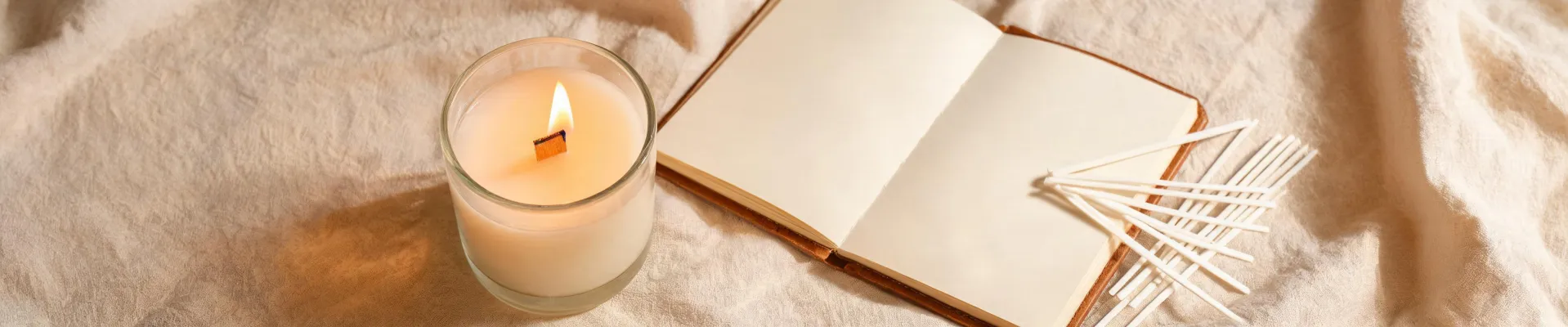
WoodWick candles have something the tea set can't compete with: the crackling wooden wick. If you look through woodwick fireside candle reviews, the sound comes up again and again—people describe it as a mini fireplace on their coffee table. It turns a candle from a passive object into a multi-sensory moment. That's a talking point. That's what gets mentioned in the office kitchen.
To be fair, the tea set has one real advantage: universal acceptability. Some recipients don't want scented products, and a jar candle with an open flame isn't for everyone. Votive candles are even less distinctive—they're a commodity, and honestly, they read as "stocking stuffer" energy. If your recipient list skews conservative or includes known fragrance sensitivities, the tea set remains a defensible pick. But for the other 80% of our list, the WoodWick candle created a genuinely memorable experience.
The verdict: WoodWick wins on experience and recall. Tea sets win on universal safety. That's a real trade-off, and it depends on your audience.
Dimension 3: Logistics (The Part Nobody Budgets For)
Shipping weight I've covered. But the logistical story runs deeper.
Storage: Two hundred tea set boxes consumed four pallets in our storage room—which we share with IT's old monitors and a broken standing desk. The WoodWick candle sets stacked neatly on a single pallet. When your storage space is at a premium (literally), that's a real difference.
Shelf life: Tea goes stale. We ship in two waves—employees in early December, clients in mid-January—and by the second wave, the loose-leaf in those boxes had lost its freshness. WoodWick candles don't have that problem. A properly stored candle holds its scent throw for much longer. That made the two-wave shipping model work without quality degradation.
Fragrance policies: I initially worried about this. Two of our office locations have no-fragrance policies, and a few employees have sensitivities. But since these gifts are delivered to homes and not offices, it was a manageable consideration—we simply offered a wax melt alternative (they're lighter and even more compact) to the handful of recipients who asked.
The verdict: WoodWick wins logistics clearly. Lighter, denser, longer shelf life, lower damage risk. The only simpler option is a digital gift card, which is a different conversation.
Dimension 4: What Your Gift Says About Your Company
This one's harder to quantify, but I've seen the response differences play out.
A tea set from a corporate catalog says "we ordered from the catalog." It's fine. It's expected. It also says "we didn't think much about who you are." Several recipients already had tea sets at home; ours went straight to a cupboard.
A WoodWick candle gift set says "we chose something we want you to experience." The crackling wick is a sensory signature—it's distinctive in a way that a teapot simply isn't. Recipients post about it, mention it in meetings, bring it up at the next company visit. That word-of-mouth value is worth real money to us as a company.
I also briefly considered a DIY path—craft kits like a suncatcher paint set, small plant kits, that sort of thing. It feels personal, but the hidden costs are significant: you'd need to write clear instructions (not everyone knows how to use suncatcher paint properly), assemble materials, pack them, and field questions from recipients who can't figure it out. For 200 recipients, that's a part-time job. For a 15-person team, it could be lovely. For us, it's a non-starter.
The verdict: WoodWick wins on brand perception. It reads as deliberate, premium, and thoughtful—without feeling like we overspent.
My Recommendation: When to Choose What
Look, I get why people default to the safe, traditional option. Budgets are real, and nobody got fired for buying tea sets. But the numbers changed my mind this year.
Choose WoodWick candles when:
- Your budget per recipient is in the $25-45 range (gift sets price publicly at roughly $25-50 as of January 2025; verify current rates)
- You're shipping gifts rather than delivering them in person
- You want recipients to remember the gift into February
- Your recipient list is diverse and you want broad appeal
- You care about total cost, not just the quote
Choose the tea set when:
- Recipients have known fragrance sensitivities or open-flame concerns
- You're delivering locally—shipping costs won't penalize you as heavily
- Your audience skews traditional and you want zero sensory risk
- Your tea set vendor has strong damage replacement policies (verify the fine print)
The DIY route:
- Only for teams under 15 people where the personal relationship is the gift
- Budget for instruction writing, material sourcing, and troubleshooting time
One last thought: we reinvested the $2,300 in savings into upgrading client-facing boxes to WoodWick's larger gift sets. So the total cost approach didn't just save money—it let us spend smarter where it counted. (I really should propose that as a formal model for next year's planning. Mental note: add to Q3 agenda.)
If you're making this call for your own company, I hope the framework helps. The right answer genuinely depends on your recipient list and logistics. But next time someone says "the tea set is cheaper," ask them to show you the freight invoice first.

Elise Laurent
Elise Laurent is a crystal and decorative glass quality analyst covering crystal figurines, vases, ornaments, suncatchers, and gift glassware. She examines ISO 6486-1 where food-contact glass dinnerware applies, then uses polarized strain inspection, dimensional checks, surface-defect grading, and refractive clarity to compare decorative pieces outside that scope. Her work helps sourcing teams choose materials, finishing routes, and protective packaging without confusing visual brilliance with verified durability.