WoodWick Candle Reviews: Three Scenarios, Three Answers for Corporate Gifting
2026-08-04 / Elise Laurent
Years ago, I spent the better part of a week googling "where to buy a photo book" for a colleague's retirement gift. The answer, it turned out, wasn't a brand or a website. It was a question: what's the scenario? A $10 spiral-bound book for fifty people to sign is a completely different purchase from an $80 linen-wrapped hardcover for the retiree's desk.
WoodWick candles for corporate gifting are the same way. Can I give you a blanket answer on whether they're worth it? No. And if a sales rep gives you one, they're probably working their quarterly quota, not your best interest.
I say that as someone who's lived it. I'm a procurement manager at a 180-person B2B services company, and I've managed our corporate gifting budget—roughly $32,000 a year—for six years. I've negotiated with 40+ vendors, tracked every order in our cost system, and lit more test candles than I care to admit.
Here's what the data says: you're probably in one of three scenarios, and each one has a different answer.
Scenario A: You're buying 100+ units as promotional products or team gifts. Your per-unit target is $15-25, and the budget needs to stretch.
Scenario B: You're buying a smaller batch—1 to 50 units—for key clients, partners, or executives. You want the gift to feel premium, and you have $50-100 per recipient to work with.
Scenario C: You're a retailer or reseller deciding whether WoodWick deserves space on your shelves. Margin and sell-through are the only numbers that matter.
Three different situations. Three different answers. Let's walk through each.
WoodWick Candle Reviews: The Baseline
Before scenarios, let's be honest about the product itself. WoodWick sits solidly in the mid-market: above grocery-store candles, below $60 boutique brands. Most collections retail between $15 and $35.
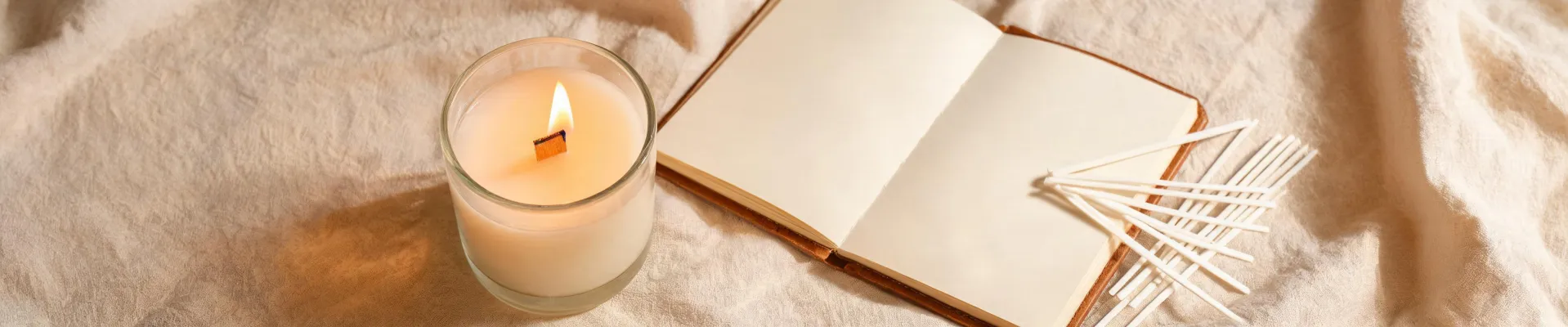
The signature feature is the wooden wick, which crackles as it burns. Marketing calls it "a fireplace in a jar." Having lit dozens of them, I'd describe it as a quiet, sparkly whisper—a subtle effect, but enough to make the candle feel like an experience rather than just a scent dispenser. For corporate gifting, that translates into "this isn't the same candle from the corner store."
Scent quality is good, with one caveat: the hot throw (scent while burning) beats the cold throw (scent unlit). That matters because recipients smell a candle before they light it. The Redwood WoodWick candle—earthy, woody, with a faint spice edge—is the one I'd recommend for corporate gifts. It's the gray suit of candle scents. Works for almost any recipient, any season, any desk.
What most people don't realize: scent strength varies from batch to batch. We ordered 180 Redwood candles for our 2023 holiday client gifts. Most were excellent. Some were noticeably lighter on the nose. No single-candle review would ever catch that. A 180-unit order will.
So glad we test samples from the actual production batch now. Back then we didn't, and we got lucky. In early 2024 we almost ordered 500 units blind for an employee recognition program—the sample batch came back flat, and we dodged that bullet.
Scenario A: Promotional Products and Team Gifts (100+ Units)
If you're buying in volume, WoodWick can work, but you need to be selective.
Stick with the smaller Signature Collection jars. Through corporate accounts, I've seen them land at $15-18 per candle in quantity. At that price, you're giving a gift that feels genuinely nice rather than like a promotional trinket. And the crackling wick gives people something to mention—that alone is worth something.
The catch: WoodWick doesn't offer custom branding on their jars, at least not through their standard B2B channel. So you're gifting an unbranded product. If your campaign's goal is logo impressions, that's a real limitation. If the goal is "here's a nice gift, no strings attached," you're fine.
From our 2023 order:
- 180 Redwood Signature candles: roughly $18/unit
- 180 basic metal candle holders: roughly $7/unit
- Bulk shipping to our office: roughly $300 total
- All-in: around $27 per unit
We went a hair over the $25 target because the gift landed well. If I had to cut something, I'd cut the candle holder before the candle. A candle without a holder is still a nice gift. A holder without a candle is just a metal cup.
To be fair, promo distributors will sell you branded tin candles for $10-12/unit. I've tested those too. Most of them smell like bargain-bin air fresheners. A WoodWick at $27 all-in is a completely different category.
Scenario B: Premium Client and Executive Gifts (1-50 Units)
This is where WoodWick genuinely earns its keep.
Here's the formula: Redwood in their larger collection—I believe it's the Ellipse line, but don't hold me to that—paired with a quality candle holder. You land at $50-75 per gift, which reads as thoughtful rather than generic. For executives and key clients, that's the sweet spot.
Here's something vendors won't tell you: candle costs aren't in the wax. They're in the vessel. WoodWick's larger containers are substantial—they feel heavy and premium, and they have a second life after the candle burns down. That's the difference between a gift that sits on someone's desk for months and a gift that ends up in the trash with the ribbon.
For the candle holder, budget $15-30. A simple ceramic or brushed-metal holder works well. You don't need a brand-name holder—I've found solid options at discount home goods stores for $12-18. The trick is pairing them together so the recipient doesn't have to do anything except enjoy it.
One honest caveat: if you're gifting someone with genuinely expensive taste—the person who wears a watch worth more than your quarterly bonus—skip WoodWick. There are luxury candle brands at double the price, and yes, it shows. That sounds snobby, but it's sales reality. WoodWick is an excellent gift for 95% of your client list. For the one person who has everything, find something they wouldn't buy for themselves.
Scenario C: Retail Resale
If you're a boutique or gift shop evaluating WoodWick, the analysis is entirely different.
Relevant context: WoodWick is part of Newell Brands, the parent company of Yankee Candle. That means serious distribution muscle and consumer brand recognition. Both cut in your favor and against you.
In favor: shoppers already know the name, so you're not spending time educating customers. Against you: margins are slimmer than what independent candle makers offer. You won't be marking WoodWick up 100% the way you can with a small-batch artisan brand.
For a small retailer, I'd be cautious about the mainstream collections. You're competing with Amazon and big-box stores on price. Where WoodWick works on a retail shelf is the premium lines and gift sets—the products that don't dominate Amazon search results. The larger crackling candles are visually impressive, and that presence works better in person than it does on a screen.
My advice: order a mixed test batch, track sell-through for 90 days, and compare against one or two independent candle brands. If WoodWick moves fast enough to justify the margin, keep it. If it's gathering dust on day 60, cut it and don't second-guess yourself.
Which Scenario Are You In?
Three questions. Answer them honestly.
- How many units? 100+ suggests Scenario A. Under 50 suggests Scenario B. Buying for your own shelves means Scenario C.
- Who receives it? Employees and event attendees? Scenario A. Clients and executives? Scenario B. Your store's customers? Scenario C.
- What drives the decision? Unit price drives Scenario A. Perceived value drives Scenario B. Margin drives Scenario C.
If you're still unsure, factor in the cost of being wrong. Buying too cheap for a top client creates a moment of awkwardness you'll remember for years. Buying too expensive for a 200-person team is just inefficient. Asymmetric risk says: spend a bit more on the small batch, keep tight on the big one.
Operational Fine Print
Three things I wish someone had told me before my first large candle order.
Shipping adds up. According to USPS (usps.com), as of January 2025, a standard First-Class letter costs $0.73 and a large envelope runs $1.50. A candle fits in neither. You're in package territory, where the starting point is $4-8 per unit, and that's before any surcharges. If you're shipping to multiple addresses, compare vendor direct-ship against a fulfillment service. At scale, we've found fulfillment is often cheaper than paying our own team to pack boxes.
Be careful with "eco-friendly" language. If your gifting campaign includes marketing claims about natural, recyclable, or eco-friendly materials, review the FTC Green Guides first (ftc.gov, 16 CFR Part 260). Environmental claims require substantiation. I nearly approved a promotional insert in 2023 calling our candle containers "recyclable" without checking the base material. It got caught in legal review. Don't make that mistake.
The photo book lesson applies here too. All those years ago, the "where to buy a photo book" question resolved itself once I defined the scenario. Same with candles. Once you know the quantity, the recipient, and the decision driver, the "which WoodWick" question becomes simple. Before you know those three things, every answer feels wrong.
Bottom Line
WoodWick candles are a good value in the right scenario.
Buying 100+ for a team? They're better than the promo-supplier alternatives, and the premium over cheap candles is worth it.
Buying a dozen for the clients who matter? The crackling wick is a subtle but real differentiator. Pair it with a decent holder and you have a $60 gift that feels considered.
Reselling? Test, measure, decide. Don't commit to volume before the data gives you permission.
The worst mistake in corporate gifting isn't picking the wrong brand. It's analysis paralysis while the deadline approaches. In Q2 2024, I spent three months comparing eight vendors and missed our ideal ordering window by two weeks. The rush shipping we paid to recover ate most of the savings I'd negotiated.
Know your scenario. Commit to the decision. Order the candles.
And if you're weighing WoodWick against another brand, remember: the recipient compares your gift with what others send them. In that comparison, a crackling candle holds up well. I've checked.

Elise Laurent
Elise Laurent is a crystal and decorative glass quality analyst covering crystal figurines, vases, ornaments, suncatchers, and gift glassware. She examines ISO 6486-1 where food-contact glass dinnerware applies, then uses polarized strain inspection, dimensional checks, surface-defect grading, and refractive clarity to compare decorative pieces outside that scope. Her work helps sourcing teams choose materials, finishing routes, and protective packaging without confusing visual brilliance with verified durability.