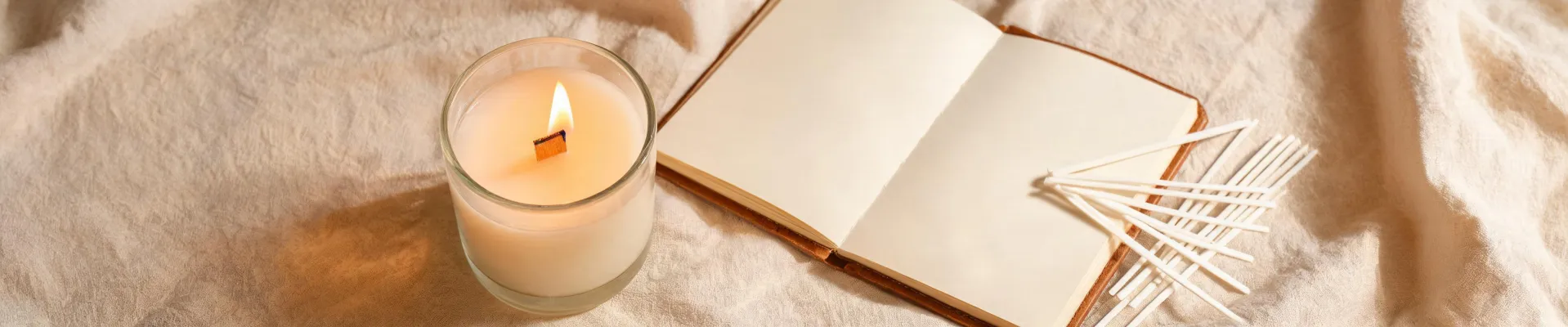
Why Is My WoodWick Candle Not Staying Lit? 5 Fixes to Try Before You Replace It
2026-08-20 / Elise Laurent
Before You Throw It Out
You're hosting a dinner party in two hours. The table's set, the lights are dim, and you finally light that WoodWick candle you've been saving for a special occasion. The flame flickers, dances, and dies. You light it again. It dies again.
If that's you, I know exactly what you're dealing with. I'm the fulfillment coordinator at a corporate gifting company, and I've handled 400+ rush orders over six years, including same-day turnarounds for event and marketing clients. The question I hear more than any other from our clients isn't about shipping dates. It's this: why is my WoodWick candle not staying lit?
Here's the thing: nine times out of ten, it's not a defective candle. It's a wick that needs about two minutes of attention. So before you toss it and buy a replacement, try these five fixes.
And a quick note on the cost of giving up. A standard WoodWick candle runs roughly $20–35 depending on size and scent (based on retailer pricing I've seen as of January 2025—current rates vary). A replacement costs that, plus gas or shipping. The fixes below cost $0. I think about purchasing decisions in terms of total cost, not just the sticker price. A $30 candle you can save is cheaper than replacing it—but only if you don't give up at the first sign of trouble. Fix first. Replace second.
The cheapest solution isn't the one with the lowest price tag—it's the one that solves the problem without creating new costs.
Five Fixes That Cost Nothing
One short piece of context first. A wood wick isn't a cotton wick. It's a thin strip of wood that pulls melted wax upward through its own structure while the flame burns. Anything that interrupts that flow kills the flame. That's why a WoodWick candle can burn perfectly for an hour and then go out without warning. The five fixes below are all about restoring the fuel supply.
Fix 1: Trim the Wick to 1/8 Inch
With the candle cool and the wax set, look at the wick. If it's sticking up more than about 1/8 inch above the wax, that's your problem.
Here's the part people get backwards: with a wood wick, a longer wick doesn't mean a stronger flame. It means a flame that burns too high, outruns its fuel supply, and dies. The wick needs to be short enough that wax can travel up and keep the flame fed steadily. About 1/8 inch—roughly the thickness of two stacked US quarters, or about 3 millimeters—is the sweet spot. (Should mention: I double-checked the math, and two quarters get you to about 3.5 mm. Close enough for candle purposes.)
To trim: you can use a wick trimmer, but most people don't own one. I don't. Just snap the charred top off with your fingers. Wood wicks break cleanly at the char line. That's my preferred method, and it works better than scissors, which can crush the wood and cause problems a few burns down the line.
Fix 2: Clear the Mushroomed Tip
Even a wick at the correct height can fail if the tip has 'mushroomed.' That's the glazed, dark buildup that forms after a few burns. It looks like a tiny black club, and it acts like a seal—it blocks the porous wood from drawing wax upward.
The fix takes five seconds: with the wick cool, gently bend the tip sideways and snap it off. You're exposing fresh, porous wood underneath.
Don't yank it. I've seen someone pull hard enough to pull the entire wick out of the wax bed. That candle was not salvageable. A gentle snap is all you need.
Fix 3: Move It Out of the Draft
If you've trimmed and cleared the wick and it still goes out, look at the room. Where is the candle sitting?
Wood wicks produce a smaller, lower flame than cotton wicks. They can't handle air movement the way cotton can. A draft that wouldn't bother a cotton wick at all—an AC vent, a ceiling fan, a cracked window—will snuff out a wood wick every time.
Test: light the candle and watch for 15 seconds. If the flame bends sideways, flickers hard, and then dies, it's airflow. Move the candle to the center of a table, away from vents and windows. One client last fall was convinced her candle was defective. It was sitting on a windowsill directly below an AC vent, with the window cracked. We moved it to her coffee table. Problem solved. More often than not, when we get a report of a 'faulty' candle, it's sitting in a draft. At least, that's been my experience.
Fix 4: Fix the Wax Pool (Yes, Wax Melts)
A question one of our buyers asked me last year, completely sincerely: does wax melt? Yes. Absolutely. But it doesn't all melt at once—and the way the first burn goes determines whether your candle stays lit long-term.
The first burn should last 2 to 4 hours, until the entire top layer of wax is liquid and the pool reaches the glass. That establishes an even melt pool for every burn after. If you cut the first burn short after 20 minutes, you get tunneling: wax melts only in a circle around the wick, leaving walls of solid wax around the edges. Over time, the wick sinks into a deep crater. The flame gets trapped at the bottom, melted wax floods the wick, and the flame goes out.
If you already have a tunnel, try one of these:
- The foil trick: wrap aluminum foil loosely around the top of the jar, leaving the center open. The reflected heat softens those tunneled walls over a couple of burn sessions.
- The scoop trick: while the wax is warm (not hot), use a dry paper towel to soak up some of the excess melted wax from the well. That gives the wick breathing room and raises it relative to the wax edge.
Fix 5: Light It Like It's Wood
Wood isn't a fuse. It needs time to catch—longer than you think.
Most people touch a lighter flame to the wick, see the wood glow, and pull away. Then the glow fades and the candle goes out. Next time, hold the flame to the base of the wood wick for a full 5 to 10 seconds. Wait until the wick is burning steadily before you remove the lighter.
Also, skip torch lighters with their huge hard flame. They scorch the wood and speed up the glazing problem from Fix 2. A standard lighter or a long match is the right tool. (Full disclosure: I use a long-reach lighter because I've singed my fingers one too many times. Use whatever you can hold steady.)
One more: if the wick has curled over and is lying flat against the wax, that's a kill shot. The flame can't survive when the wick is face-down in the melt pool. Fix it by warming the top of the wax with a hairdryer until soft, straightening the wick upright with a toothpick, letting the wax set, and then trimming and lighting as usual.
If It Still Won't Stay Lit
If you've gone through all five fixes and the flame still dies, there are two remaining causes worth checking.
First: moisture. If the candle sat in a cold garage or damp basement, the wick can absorb moisture. Leave the candle in a warm, dry room for 24 to 48 hours and try again. This has rescued more than one 'dead' candle in our own warehouse.
Second: a loose wick anchor. The wick base is held in place by a small metal tab at the bottom of the jar. If that tab comes loose, the wick drifts and keeps drowning in the melt pool. That's the one case where replacement is the honest answer. It's rare—based on our internal numbers across 1,200+ candles we've handled, well under 1%. But it happens.
For Corporate Buyers: Put This in Every Gift Box
If you're here sourcing gifts for employees or clients rather than rescuing a candle on your dining table, this section is for you.
WoodWick candles are a staple of corporate gifting because they feel premium without being flashy. The WoodWick campfire candle is, in my experience, the most requested scent we put into holiday gift boxes. Pair a jar candle with a holiday figurine or a Christmas ornament, and you have a gift set that feels intentional—useful, seasonal, and easy to finish with a branded tag.
But the 'won't stay lit' complaint will reach your inbox eventually. The fix is a small insert card in every candle gift box. Two lines: 'Trim the wood wick to 1/8 inch before lighting. Hold the flame to the wood for ten seconds.' In December 2024, we packed 300+ gift boxes with that insert, and the post-holiday support emails dropped noticeably. It's a tiny detail that makes recipients feel taken care of—and it keeps you from answering 'why is my WoodWick candle not staying lit' all through January.
The Bottom Line
A two-minute trim costs nothing. A ten-second light costs nothing. Moving the candle three feet costs nothing. All of those fixes cost less than a replacement, and they work most of the time.
So before you give up on your WoodWick candle: trim, clear, check the air, level the pool, and light it with patience. If that flame settles in and you hear the crackle, you'll know the two minutes were worth it.

Elise Laurent
Elise Laurent is a crystal and decorative glass quality analyst covering crystal figurines, vases, ornaments, suncatchers, and gift glassware. She examines ISO 6486-1 where food-contact glass dinnerware applies, then uses polarized strain inspection, dimensional checks, surface-defect grading, and refractive clarity to compare decorative pieces outside that scope. Her work helps sourcing teams choose materials, finishing routes, and protective packaging without confusing visual brilliance with verified durability.