Why Cheap WoodWick Candle Gift Sets Cost Me $4,700 (A Procurement Post-Mortem)
2026-08-06 / Elise Laurent
I still remember approving the lowest quote for a 250-piece corporate gift order. The line item said “WoodWick candle gift sets.” What arrived was something else: wicks that didn’t crackle, labels peeling at the edges, and a “lavender” scent that smelled like a candle aisle after a fire drill.
We saved $2.10 per unit. The rework ended up costing us almost $4,700—and when I say “almost,” I do not mean a rounding error—plus a one-week delay that nearly cost us a client. That’s when I stopped buying on price alone.
When I first started handling procurement, I assumed the lowest quote was the smartest quote. Three expensive rounds of rework later, I learned that the real question isn’t “How much does it cost per piece?” It’s “What does it cost to own this decision?”
I’ve been managing corporate gifting orders for eight years. I’ve personally made—and documented—14 significant mistakes that wasted roughly $23,000. Now I maintain our team’s pre-order checklist, and in the last 18 months it has caught 47 potential errors—maybe 43, I’d have to check—before they became someone else’s post-mortem. This is one of those stories.
The Surface Problem: Cheap Candle Gift Sets Are Cheap for a Reason
On the surface, the logic kinda makes sense. Your procurement dashboard shows a low price per unit, and you feel like a hero. But the problem isn’t the price. It’s the gap between what you think you’re buying and what the supplier is actually selling.
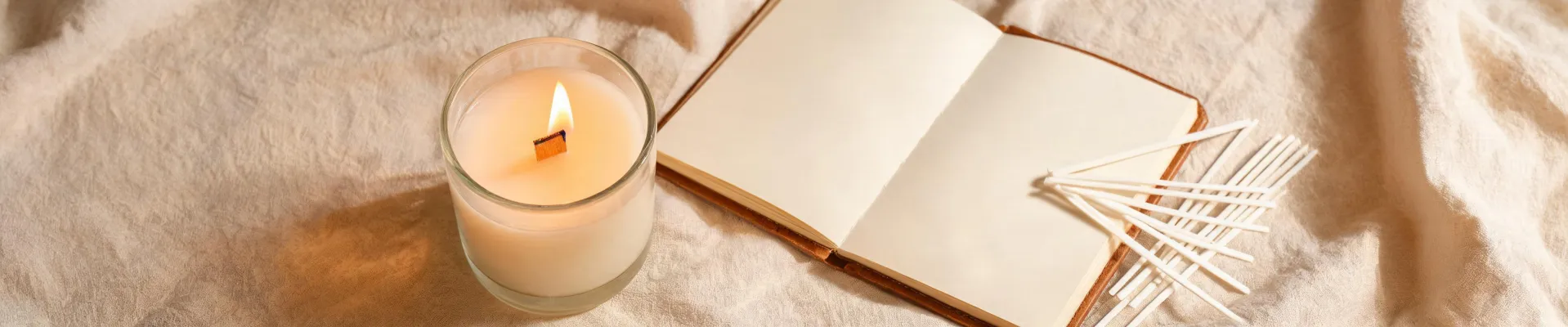
Let’s start with the obvious example: a woodwick candle. A genuine woodwick medium candle is not just any candle with a flat stick in the middle. It’s a product with a real wooden wick that crackles, a container that supports a safe burn, and enough fragrance oil to actually fill a room.
When you buy from a cheap vendor, you might get none of that. I’ve seen “woodwick” candles with wicks as thick as a popsicle stick and as crackly as wet tissue paper. I’ve seen jar bottoms that heat up to the point where you don’t want to leave them unattended. And I’ve seen what happens when you don’t put a detailed spec in writing.
A wax melt is another trap. Wax melts look simple—small cubes of scented wax. But cheap wax melts can arrive brittle, sweat oil, or lose their scent the moment they melt. The phrase “scented” is doing a lot of work on a packaging line. You don’t find out until you melt your first sample.
The Deeper Issue: You’re Comparing Price, Not Specifications
The root cause of most gift order failures isn’t greed or stupidity. It’s that buyers compare quotes with an incomplete spec. That’s exactly what I did.
The data said the budget vendor was 30% cheaper. My gut said the vague email replies were a preview of vague production details. I went with the data. My gut was right.
When I submitted that first order, the spec said “200 candle gift sets.” That was it. The supplier interpreted that as “anything with wax and a wick in a glass jar.” The production sample was not the approved sample, and the differences were all in the details: thinner wicks, a different vessel size, and label adhesive that failed in transit.
This is the deeper problem. Every supplier interprets a vague specification differently, and the cheapest supplier usually interprets it most creatively. The more specific you are, the less room there is for interpretation—and the less likely your “bargain” becomes a redo.
September 2022 is still a scar on my budget. I ordered 300 “crystal gift” ornaments from a discount supplier after checking a sample myself. The sample looked fine. The production run was not. It was acrylic with a few glass flecks glued on. We caught it when a client sent close-up photos and asked, “Is this really crystal?” $3,200 order. $890 redo. One week delay. A credibility hit I still feel.
The Hidden Price Tag: What the Lowest Quote Doesn’t Show
Let me put numbers to this. We “saved” $2.10 per unit on that first order. Here’s where the savings went:
- Sample variance: the production wicks were too thin and didn’t crackle. We requested new wicks: $450 in testing and sample reshipment.
- Rush delivery: $220 to overnight replacement components, then another week of production time.
- Relabeling: $680 because the cheap adhesive peeled off in warm weather.
- Client management: a two-hour call with HR because the gift boxes smelled like a gas station. You can’t bill that back.
Add it up: $1,350 in immediate rework, plus a week of delay—and that was still smaller than the $3,200 crystal gift mistake. Across all my failures, the pattern is identical: the unit price was low, but the total cost of ownership was high.
Oh, and we could have caught the adhesive problem if we’d tested a production box at 90°F. We didn’t. That one is on me.
There’s also the hidden cost of packaging and postage. If you’re mailing products directly to your customers or clients, the shape of the package matters. USPS pricing for First-Class Mail is $0.73 for a 1-oz letter and $1.50 for a 1-oz large envelope (usps.com). That gap grows when your package doesn’t fit standard dimensions. A cheap supplier might not design with mailing standards in mind, so every unit that “almost fits” costs more than your forecast.
And if the vendor makes environmental claims like “recyclable” or “eco-friendly,” get it in writing. The FTC Green Guides (ftc.gov) require that environmental marketing claims be substantiated. I’m not a compliance attorney, so I won’t pretend to give legal advice. What I can tell you: if you repeat a supplier’s unproven claim to your customer, the compliance risk becomes your problem too.
Another recurring cost is the support time you’re gonna eat after the order ships. People ask, “How do I remove wax from a candle jar so I can reuse it?” If your supplier knows their product, they can tell you: freeze the jar to shrink the wax, tap it out, and wipe the inside with a paper towel. If your supplier can’t answer basic use-and-care questions, that’s a red flag. You’ll end up answering those questions for them.
The Fix: A Short Pre-Order Checklist That Saved My Budget
In Q1 2024, after the third rejection, I created a simple pre-order checklist. Since then, we haven’t had a single gift-order rework. It’s not groundbreaking. It’s mostly discipline.
- Write the complete spec before you ask for quotes. Include wick type, vessel dimensions, wax formula, label adhesive, packaging design, and expected burn behavior.
- Ask for a pre-production sample from the actual production line—not the polished sample from the sales desk.
- If the product is a candle gift set, ask the supplier how to remove the wax from the jar safely. A supplier who can answer this knows their product. A supplier who can’t is not a partner.
- Get exact dimensions, weights, and shipping methods before you sign, especially if you’re mailing direct. Test with USPS Business Mail 101 if you’re a U.S. mailer.
- Verify any “green” or “natural” claims. Request documentation for FTC compliance, and run it past your legal team if the campaign is high-visibility.
- Put a quality clause in your PO: if the production run doesn’t match the approved sample, the vendor covers rework at their cost.
That’s it. Not a dramatic reinvention, just the boring stuff that prevents the $4,700 surprise.
Looking back, I should have written that spec before the first order. At the time, “candle gift set” seemed clear enough. It wasn’t.
Look, I’m not saying every budget vendor is a bad vendor. I’m saying the cheapest quote is not the same as the most economical choice. Especially when the item is a branded experience like a WoodWick candle gift set, a custom wax melt bundle, or a themed crystal gift, the gap between “cheap” and “valuable” shows up in the details.
Price is not the same as cost.
The lowest bid can be the most expensive lesson I’ve learned in eight years of procurement. At least, that’s been my experience. But it doesn’t have to be yours.

Elise Laurent
Elise Laurent is a crystal and decorative glass quality analyst covering crystal figurines, vases, ornaments, suncatchers, and gift glassware. She examines ISO 6486-1 where food-contact glass dinnerware applies, then uses polarized strain inspection, dimensional checks, surface-defect grading, and refractive clarity to compare decorative pieces outside that scope. Her work helps sourcing teams choose materials, finishing routes, and protective packaging without confusing visual brilliance with verified durability.