A Cost Controller's Checklist for Corporate Gifts: WoodWick Candles, Embroidery Kits, and TCO
2026-08-05 / Elise Laurent
-
When to use this checklist
-
Step 1: Match the gift to the recipient's context
-
Step 2: Know what you're buying—are WoodWick candles good?
-
Step 3: If you're buying embroidery kits, know your craft terms
-
Step 4: Compare total cost of ownership, not unit price
-
Step 5: Add real shipping costs and packaging time
-
Step 6: Ask for compliance, labels, and safety paperwork
-
Three mistakes I still see
-
The short version
This checklist is for anyone who buys corporate gifts in batches—25, 100, 500 units—and is tired of watching those gifts end up in a storage closet. I'm a procurement manager at a 95-person professional services firm. I've managed our gift budget (roughly $40,000 a year) for six years, compared 40+ vendors, and tracked every order in our cost system. This is the exact checklist I use when I'm choosing between a premium WoodWick candle set and a personalized embroidery kit.
When to use this checklist
Use it when you need a meaningful, personalized gift but you're not sure what to buy. It works for client appreciation, employee onboarding, conference swag, and remote team recognition. If you're buying a one-off gift for a friend, you can skip the vendor math. If you're buying for a group, total cost matters more than the unit price.
Step 1: Match the gift to the recipient's context
Start with the recipient, not the product. A WoodWick gift set with Cashmere candle is a strong move for a client who actually lights candles. An embroidered kit with a custom hoop might be perfect for an employee wellness day. But they send different signals. “Personalized gift” can mean a monogrammed kit, a label with their name, or a scent selected based on their office. Don't force personalization that doesn't fit.
I have mixed feelings about the classic “safe candle.” On one hand, candles are widely accepted. On the other hand, some people are sensitive to fragrance. At least with an embroidery kit, there's an activity attached, so it can feel more personal. The catch? It needs to match their skill level.
Step 2: Know what you're buying—are WoodWick candles good?
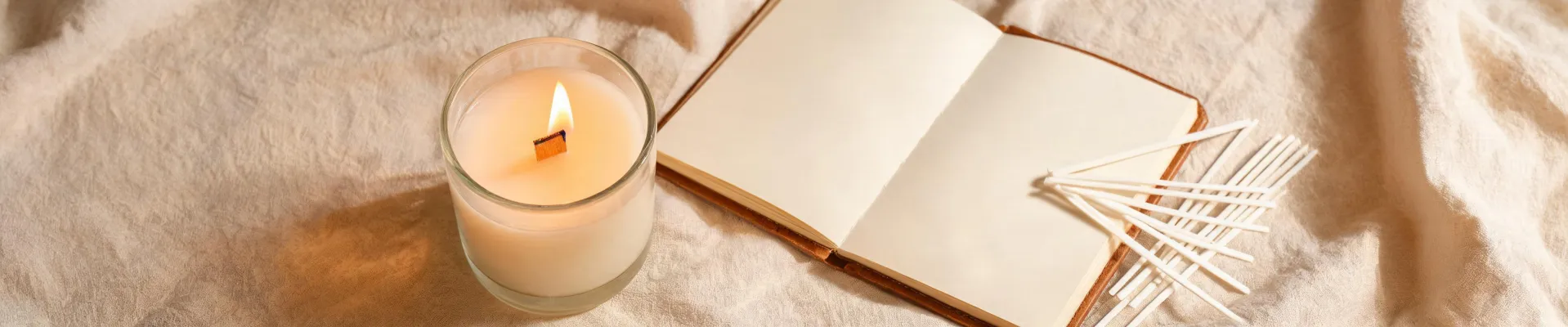
Short answer: it depends. From a cost-controller's view, WoodWick candles are a solid mid-premium option for corporate gifting because the wooden wick creates a visible, audible difference. The crackle isn't a marketing trick; it's a physical wick behavior. The scent throw is strong in the sizes we've ordered. For the record, WoodWick candles Cashmere is one fragrance, not a separate collection—and it's the one we've reordered most. In our 2024 post-gift feedback, Cashmere was the most-complimented scent. But “good” also has to mean good for the recipient's environment. If they have allergies, no candle is good.
Watch the claims, too. Per FTC guidance, marketing claims need to be truthful and substantiated. If a supplier says “clean burning” or “100% natural,” ask for the spec sheet. We ask for fragrance oil percentages and wax composition before we approve a candle. That's not being difficult—it's preventing a complaint later.
Step 3: If you're buying embroidery kits, know your craft terms
One question I get a lot is: “Are needlepoint and cross stitch the same?” The answer is no. Needlepoint is worked on a stiff, open-weave canvas with yarn, and the stitches cover the entire canvas. Cross stitch uses a count fabric like Aida or linen, with X-shaped stitches forming a pattern; negative space often remains. “Embroidery kit” can include both, plus surface embroidery. This matters for B2B buying because the recipient's skill level determines whether the kit gets used. Needlepoint is more structured; cross stitch is easier to pick up. If you're gifting to a mixed group, choose a kit labeled beginner-friendly and include clear instructions.
A personalized embroidery kit—custom hoop color, initials, or a company logo finish—adds shelf appeal without changing the craft. It also makes the gift feel intentional, like you spent more than you did. But be honest about the difficulty; a complex kit with no guidance is a gift that becomes frustration.
Step 4: Compare total cost of ownership, not unit price
You'll see two numbers: the candle vendor's $42 per unit and the kit vendor's $31 per unit. The second looks cheaper until you add setup, packing, freight, and labor. Our Q2 2024 comparison is a good example.
50 WoodWick candle gift sets: $42/unit + $55 shipping = $2,155. They arrived ready to hand out.
50 personalized embroidery kits: $31/unit + $185 logo setup + $2.10/unit packing + $95 freight = $1,935. Then our team spent 4 hours sorting threads and stuffing boxes—call it $160 at our internal labor rate. Total: $2,095.
The kits looked cheaper on the vendor quote by $550. After the full costs were added, they were only $60 cheaper before labor, and after labor the candles were cheaper. I've made this mistake before. I once approved a “budget-friendly” order of embroidered tote bags that cost us $1,200 in rework because the logo embroidery unraveled after three washes. The cheap unit price disappeared when we replaced 120 units. Now I calculate the full landed cost before I approve anything.
Step 5: Add real shipping costs and packaging time
Candles are heavy. Kits are bulky. Both can be deceptive for shipping. If you're sending 200 gifts individually, shipping cost is often bigger than the unit price difference. Let's use current USPS numbers. According to USPS (usps.com), as of January 2025, a First-Class Mail letter is $0.73 and a large envelope is $1.50 for the first ounce. But your package will probably be a parcel, not an envelope. A 12 oz candle in a gift box won't meet letter dimensions. Use actual weight and dimensions in your calculator; don't assume “flat rate” is cheapest. Also add address confirmation and packaging labor. In our 2023 end-of-year gifts, the “free shipping” offer was actually $900 more than a competitor's quote with shipping listed separately—because the product price had been raised to cover it. That's a real line item.
If you are shipping kits, a flat box is better than a tube. A tube looks odd and often arrives crushed. We learned that after a supplier packed embroidery kits in tubes. It felt like a poster, not a gift.
Step 6: Ask for compliance, labels, and safety paperwork
This is the step I see skipped most often. Candles need burn instructions and warning labels. Kits with needles need appropriate age labeling and a note about sharp objects. If your gift includes a wooden wick trimmer, that can be a nice extra, but only if the box has room. More importantly, if you plan to say “eco-friendly” or “natural” on the label, get substantiation. FTC Green Guides are a good baseline. A supplier can make a recyclable claim, but if the recycling claim is true only in some markets, that's a problem you inherit.
Three mistakes I still see
- Ordering by unit price, not by “will this get used?” We once bought 100 unscented mini candles because the price was unbeatable. They sit in our storage closet two years later.
- Ignoring the learning curve. A difficult needlepoint kit with no beginner instructions creates frustration. Same for a WoodWick candle if the recipient doesn't know how to trim the wooden wick. Include a care card or a trimmer.
- Skipping the sample order. I want to say we always sample first. The truth? We've skipped it twice and paid for it. Now we require every vendor to send a pre-production sample before a large order.
The short version
If you're weighing WoodWick candles against embroidery kits, don't just stare at unit prices. Define the recipient, know your craft terms, and calculate the full landed cost. My experience is based on professional services buying, mostly orders between 50 and 300 units. If you're buying for a consumer goods company or a very different group, your mileage will vary—but the process still works.
Pick one gift you'd actually want to receive. Add the shipping. Test the sample. Then order.

Elise Laurent
Elise Laurent is a crystal and decorative glass quality analyst covering crystal figurines, vases, ornaments, suncatchers, and gift glassware. She examines ISO 6486-1 where food-contact glass dinnerware applies, then uses polarized strain inspection, dimensional checks, surface-defect grading, and refractive clarity to compare decorative pieces outside that scope. Her work helps sourcing teams choose materials, finishing routes, and protective packaging without confusing visual brilliance with verified durability.