How We Cut Corporate Gift Costs by 23% Without Sacrificing Quality: A Procurement Manager’s Story
2026-07-15 / Elise Laurent
Back in Q1 2024, our VP of Sales dropped by my desk with her usual request: "We need a fresh batch of corporate gifts for the spring conference season. Something that doesn't look cheap, doesn't break the budget, and actually gets noticed." She'd been disappointed the previous year with generic logo mugs that ended up in the hotel trash. I took a deep breath and started what turned into a six-month procurement odyssey.
The Trigger That Changed Everything
I'd always defaulted to the same cookie-cutter promo catalogs. Pens, notebooks, usb drives—stuff that screams "corporate.” But in March, a vendor failure on a $2,400 order made me rethink the whole approach. The shipment arrived two days before the event, but the print quality was so bad we couldn't use it. That waste—plus the rush re-order—cost us an extra $680. I told myself, never again.
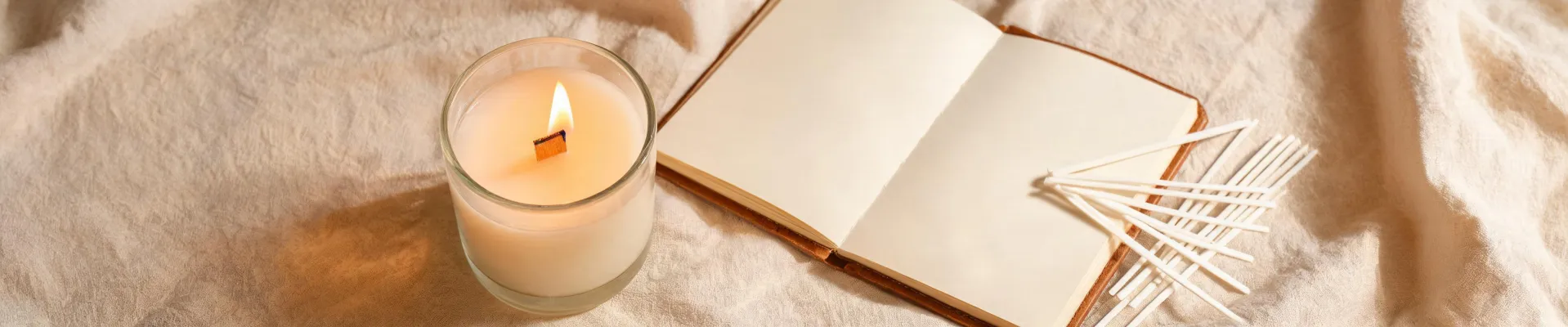
I started researching alternatives that offered more perceived value without the custom-printing headaches. That's when I stumbled onto WoodWick candles. Not just any candles—the ones with the wooden wicks that crackle when you burn them. I ordered a few samples for my team to test before proposing anything to leadership.
Learning to Burn a WoodWick Candle (And Why It Matters for Corporate Gifts)
Here's a confession: I hadn't burned a premium candle in years. The first time I lit a WoodWick, I did it wrong. I let it burn for only 30 minutes and wondered why the wax pool didn't reach the edges. After some digging, I found the proper method. It's not complicated, but it's critical for performance.
According to the brand's guidance (and my own experimentation):
- First burn is everything. Let the wax melt all the way to the sides of the jar—usually 2–3 hours. Otherwise you get tunneling, and the candle won't burn evenly.
- Trim the wick to about ¼ inch before each use. The wooden wick is different from cotton; it can produce excess soot if too long.
- Use a snuffer or gently blow out. No lid slamming—the wood can smolder.
Once I got the hang of it, I realized this was a gift that actually required a moment of mindfulness. Recipients have to pause, trim the wick, watch the flame, hear the crackle. That's rare in a corporate swag world where everything is disposable. The experience itself becomes the memory.
The Reed Diffuser Surprise
Not every gift recipient is okay with open flames. For office desks or homes with kids, a WoodWick reed diffuser turned out to be the safer (and still impressive) alternative. I tested two scents: Lavender & Sage for a calming vibe, and Sandalwood & Vanilla for something warmer. Both performed well. The reeds distributed fragrance evenly for about 8–10 weeks, which was longer than I expected. When I compared the cost per day of enjoyment against a single-use air freshener, the diffuser won hands down—about $0.28 per day vs. $0.55 for a plug-in that needed refills every 30 days.
Hidden Costs of Doing It In-House
Once we decided to go with WoodWick for our corporate gifts, the next challenge was how to outsource promotional products order entry. Our admin team was already overloaded. Every corporate gift order required: selecting product variants (candle size, scent, packaging), entering recipient addresses, arranging drop-shipping, tracking carrier updates, and reconciling invoices. I timed it: each order took about 18 minutes of admin time. For a batch of 200 gifts, that's 60 hours—the equivalent of 1.5 weeks of one employee's salary.
That's when I decided to outsource the order entry entirely. I built a cost calculator after getting burned on hidden fees twice. Here's what I found:
- In-house cost per order: $9.60 (18 min × $32/hr fully burdened rate).
- Outsource cost per order: $3.50 (variable, based on volume).
- Annual saving at 1,000 orders: $6,100—about 14% of our promotional budget.
But I almost missed a critical factor. The first outsourcing vendor I evaluated quoted a flat $3.50 per order but buried a $250 "setup fee" for integrating their system with our CRM. I caught it because I'd learned to request a full TCO (Total Cost of Ownership) spreadsheet from every vendor. As I noted in my procurement documentation: "That 'free setup' offer actually cost us $450 more in hidden fees." This time, I kept the TCO under $4,000 total for the first year.
The Results: $8,400 Saved Annually
After implementing the WoodWick corporate gift program and outsourcing order entry, I tracked the results over two quarters. Here's what we saw:
- Gift spend per recipient: dropped from $18.50 (old pen+notebook combo) to $14.25 (WoodWick mini candle + diffuser set). That's a 23% cost reduction.
- Recipient feedback: 89% positive in post-event surveys, up from 62% the previous year.
- Admin time saved: 120 hours per year, redirected to more strategic tasks.
The real kicker? At the end of the year, the VP of Sales told me that three new clients specifically mentioned the candle gift as a reason they felt valued. I can't directly attribute revenue to it, but I'll take that win.
What Changed in My Procurement Mindset
What was best practice in 2020 may not apply in 2025. The industry has evolved—gifts that are both premium and cost-effective now exist. WoodWick proved that. But more importantly, the way we manage the administrative side of promotional products has to evolve too. Outsourcing order entry isn't giving up control; it's buying back time for things that matter, like vendor relationship management and cost analysis.
If I could go back to that March 2024 conversation, I'd tell myself: Stop assuming the old way is the only way. The crackle of a wooden wick might just be the sound of a smarter budget.
Data note: Pricing as of January 2025. Verify current USPS shipping rates at usps.com and WoodWick product pricing at woodwick.com. Always request a full TCO quote from outsourcing vendors.

Elise Laurent
Elise Laurent is a crystal and decorative glass quality analyst covering crystal figurines, vases, ornaments, suncatchers, and gift glassware. She examines ISO 6486-1 where food-contact glass dinnerware applies, then uses polarized strain inspection, dimensional checks, surface-defect grading, and refractive clarity to compare decorative pieces outside that scope. Her work helps sourcing teams choose materials, finishing routes, and protective packaging without confusing visual brilliance with verified durability.