A Procurement Manager's 5-Step Checklist for Choosing WoodWick Corporate Gift Sets Without Blowing Your Budget
2026-07-15 / Elise Laurent
-
Who Should Use This Checklist?
-
The 5-Step TCO Checklist for Corporate Candle Gifts
-
Step 1: Calculate the Cost Per 'Burn Hour' or 'Impression Day,' Not Just Per Unit
-
Step 2: Identify the Hidden 'Setup' Costs Before Requesting a Quote
-
Step 3: Always Ask for 'Breakage' or 'Overrun' Policy
-
Step 4: Ask for Their 'Rush Price' Structure Before You Need It
-
Step 5: Factor in the 'Time Cost' of Managing the Order
-
Step 1: Calculate the Cost Per 'Burn Hour' or 'Impression Day,' Not Just Per Unit
-
One More Thing: Don't Forget the 'Delight Factor' TCO
When I first started sourcing corporate gifts for our quarterly client appreciation program, I made the classic mistake. I focused on the per-unit price of a nice-looking candle set. Looked good on paper. Then the invoice came with a per-item engraving fee, a setup charge for the custom box sleeve, and a rush fee because the standard lead time didn't fit our schedule. The $45 gift set ended up costing us $62 each. On a 500-unit order, that’s an $8,500 surprise I had to explain to my CFO.
That's when I stopped looking at price lists and started calculating Total Cost of Ownership (TCO). Over the past 6 years and roughly $180,000 in cumulative corporate gifting spend, I've built a checklist. It helps me evaluate vendors for items like WoodWick trilogy candles calming retreat sets or custom reed diffuser packs. This is that checklist.
Who Should Use This Checklist?
If you are a procurement manager, marketing director, or business owner buying 50 to 1,000+ units of promotional gifts like scented candles or home fragrance products, and you want to avoid the cost surprises I faced, this is for you.
The 5-Step TCO Checklist for Corporate Candle Gifts
Step 1: Calculate the Cost Per 'Burn Hour' or 'Impression Day,' Not Just Per Unit
The unit price of a WoodWick candles gift set might be $55. A competitor's generic candle might be $35. The $35 looks cheaper until you realize the WoodWick set includes a larger candle, a reed diffuser, and wax melts—each with its own lifespan.
Here's the math I do now:
- Large jar candle: approx. 80-100 burn hours
- Reed diffuser: lasts about 4-6 months (let's say 150 'impression days')
- Wax melts: about 40 hours per pack
Total 'experience hours' per WoodWick gift set: Roughly 270 hours (assuming full usage). That's $0.20 per hour for the $55 set. The generic $35 candle with only a 60-hour burn time? That's $0.58 per hour. The cheaper unit price is actually a worse deal for the impression you're leaving.
Checkpoint: Ask the vendor for the burn time and diffuser lifespan estimates. If they can't provide it, that's a red flag.
Step 2: Identify the Hidden 'Setup' Costs Before Requesting a Quote
I assumed 'customization' meant a simple sticker. Turned out to be a $350 die-cut setup for a custom sleeve. Here are the costs I now request in writing before any quote:
- Custom box/sleeve setup: $50 - $200+ for die-cutting or foil stamping plates. Many vendors waive this for orders over a certain quantity (have you asked?).
- Label printing setup: $25 - $75 if they need to create a new label layout for your company logo.
- Scent customization (if applicable): Some suppliers charge a 'blending fee' for exclusive scents, can be $100 - $500.
Checkpoint: After receiving a quote, ask clearly: 'Does this include all setup fees, or will there be additional charges for artwork setup, plate making, or color matching?'
Step 3: Always Ask for 'Breakage' or 'Overrun' Policy
I learned never to assume the proof represents the final product after receiving a batch of votive candles where 8% were cracked or had off-center wicks. This is a cost that doesn't appear on the invoice until you inspect the goods.
Ask the vendor:
- 'What is your acceptable quality limit (AQL) for defects?'
- 'Do you offer a percentage of overrun (e.g., 5% extra) to cover potential damage?'
- 'What's the process if 5% of the units arrive damaged? Do you replace them at no cost, or do I pay for rush replacement shipping?'
Here's a real example from my experience: A vendor quoted $40 per unit for 200 WoodWick trilogy candles calming retreat sets. I asked. They said 'We don't cover breakage.' I factored in a 10% potential loss buffer. The effective unit cost became $44. Another vendor quoted $43 but included a 5% overrun and free replacement of any damaged units. The second vendor's TCO was lower.
Checkpoint: Add a line to your purchase order: 'Vendor responsible for replacing damaged or defective goods at no additional cost.'
Step 4: Ask for Their 'Rush Price' Structure Before You Need It
You will need a rush order at some point. It's inevitable. The question is: how much will it cost you?
Based on publicly listed pricing for premium item manufacturers (accessed January 2025), rush fees typically run:
- 2-3 business days turnaround: +25-50% over standard price
- Next business day: +50-100% over standard price
I now ask the vendor upfront: 'What is your exact percentage premium for a 3-day, 2-day, and next-day turnaround on a reed diffuser order of 100 units?' If they can't give or won't share a clear policy, I move on. Hidden rush fees are a classic budget killer.
Checkpoint: Add the rush fee percentages to your vendor comparison spreadsheet.
Step 5: Factor in the 'Time Cost' of Managing the Order
This is the one most people ignore: your internal team's time. A disorganized vendor might take 8 emails to confirm a simple spec change. That's 45 minutes of a buyer's time at a loaded cost of $50/hour. That's a $37.50 addition to the TCO of that order.
How I quantify this now:
- Clean, clear quotation + including all costs: 0.5 hours of your time (baseline)
- Vague quote, needs 3 follow-up emails: 1.5 hours of your time ($75 equivalent cost)
- Mistake in order, needs re-correction: 3+ hours of your time ($150+ equivalent cost)
When I evaluated two vendors for a votive candle order, Vendor A's quote was $52/unit with zero administration. Vendor B's quote was $48/unit but required 4 hours of my team's time to clarify specs. The total TCO for Vendor B was higher.
Checkpoint: After a brief interaction, ask yourself: 'Is this vendor making my life easier or harder?' Harder = higher TCO.
One More Thing: Don't Forget the 'Delight Factor' TCO
The whole point of a corporate gift, especially something like a WoodWick candles gift set, is the impression it leaves. A cheap, generic candle that doesn't smell good or burns unevenly has a hidden cost: a negative brand impression. That's a risk cost that's hard to quantify but very real. If a client spends 5 minutes smelling a poorly made candle, they might start questioning the quality of your services.
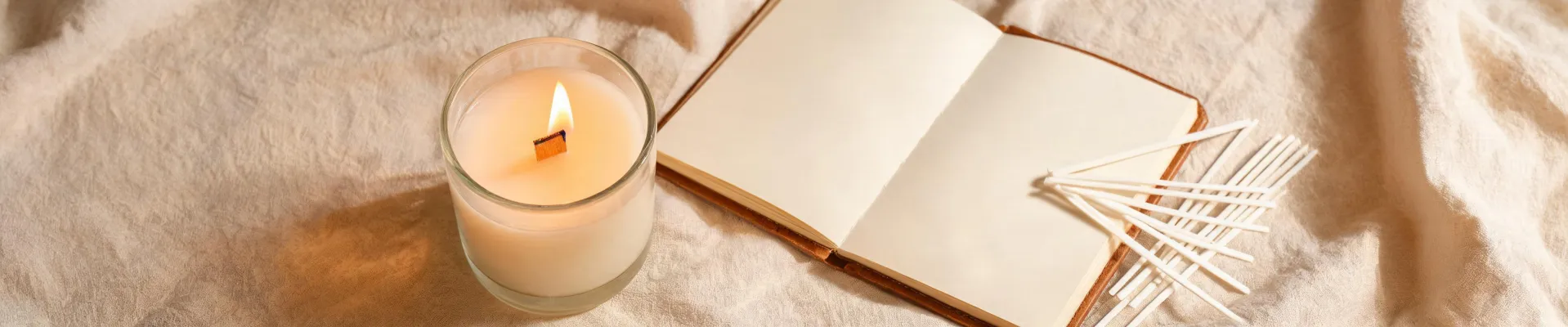
Looking back, I should have invested more in the 'wow' factor early on. At the time, I was so fixated on the unit price that I forgot the core value of a gift: to be appreciated. A premium crackling candle from WoodWick, with its signature wooden wick, creates a sensory experience that a standard candle just doesn't. That perceived value is part of your TCO calculation against the risk of a forgettable gift.

Elise Laurent
Elise Laurent is a crystal and decorative glass quality analyst covering crystal figurines, vases, ornaments, suncatchers, and gift glassware. She examines ISO 6486-1 where food-contact glass dinnerware applies, then uses polarized strain inspection, dimensional checks, surface-defect grading, and refractive clarity to compare decorative pieces outside that scope. Her work helps sourcing teams choose materials, finishing routes, and protective packaging without confusing visual brilliance with verified durability.