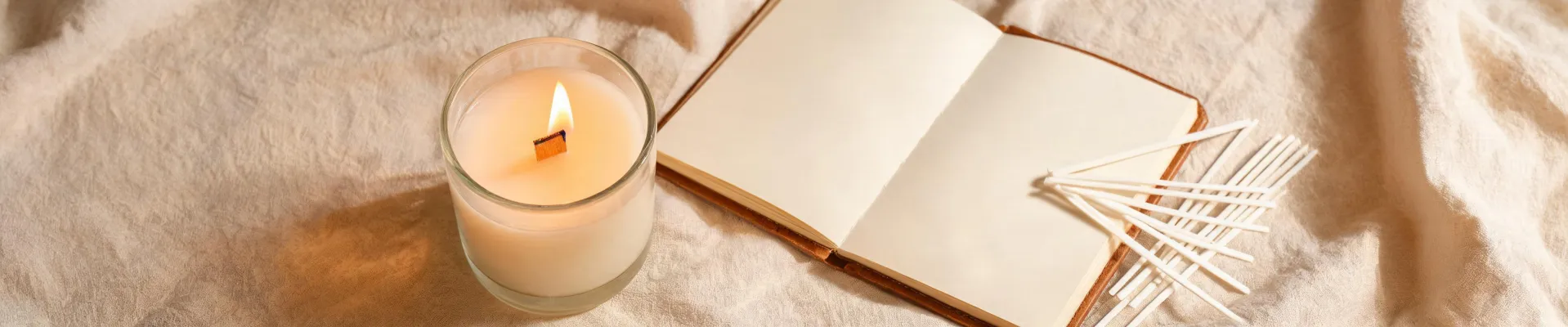
WoodWick Corporate Gifts: What a Procurement Manager Checks Before Ordering
2026-08-13 / Elise Laurent
I'm a procurement manager at a 120-person company. For the past six years, I've managed our gifts and promotional products budget—roughly $40,000 a year—and I've negotiated with more than 20 vendors. I don't have a stake in WoodWick. I just have a spreadsheet and a low tolerance for surprises. (mental note: update the TCO template before Q4.)
If you're evaluating WoodWick candles for corporate gifts, there is no single right answer. It depends on where the gift will be used, who's receiving it, and how much after-sale instruction you're willing to provide. So let's walk through the scenarios the way I'd walk through a line-item invoice.
Here's the framework I use before ordering anything: total cost = product cost + shipping + recipient support + failed-gift replacement + storage cost. The last two are the ones most people forget.
There are three common paths: home-office candle gifts, flame-free reed diffuser gifts, and branded promo add-ons. Let's look at each.
Scenario 1: You want a 'wow' gift for home-based employees
If everyone is working remotely, a WoodWick candle is a strong choice. The crackling wooden wick gives it a sensory hook. It's not just another candle in a box. WoodWick fireside candles—the smoky, cozy side of the lineup—are one of the most common winter orders I see from teams. From the outside, a premium candle looks like an indulgence. The reality is that perceived value is part of the gift's function. If a $14 candle screams 'generic,' a WoodWick set says 'we thought about this.' But that only works if the recipient can actually light it.
Here's the part that surprises procurement people: the candle is only half the job. The other half is recipient instructions. Most buyers focus on per-unit price and completely miss the support cost. When you ship 100 candles, you'll get questions. The most common one is, 'why is my WoodWick candle not staying lit?'
The short answer: wooden wicks need a little more maintenance than cotton ones.
- Trim the wooden wick to about 1/8 inch (3mm) before each burn. A longer wick starves the flame.
- Clear any burned wick debris from the wax. That debris can act like a wet blanket.
- Let the first burn melt wax all the way to the edge of the jar. This prevents tunneling and keeps the wick from drowning.
- Keep the candle out of drafts. An HVAC vent will make the flame flicker, sputter, and go out.
- Burn in 3–4 hour sessions, then trim again.
If you're buying WoodWick in bulk, add a printed card with those five steps. It costs pennies, and it saves hours of 'why is my WoodWick candle not staying lit' emails. That's not a marketing tip; it's procurement efficiency. (And honestly, the card has saved me from replacing more than one candle.)
Scenario 2: You need flame-free, low-maintenance gifts
If the recipient is in an office, hospital, factory floor, or anywhere with a flame policy, skip the candle and buy a reed diffuser instead. A WoodWick reed diffuser won't crackle, but it also won't create a fire-safety issue or a support ticket.
When I compared our Q3 candle order against our Q4 reed diffuser order side by side, I finally understood why maintenance matters: the diffusers produced zero follow-up questions. The candles produced about eight. Eight calls doesn't sound like much, but each call costs time, and time is the only budget line I can't negotiate.
Reed diffusers also have a longer surface life. A candle can be gone in a week if it's loved, or it can sit unopened if the recipient isn't comfortable with fire. A diffuser just sits on a desk and quietly works. For a quarterly gift of 200 units, that predictability is worth real money.
Scenario 3: You want branded promotional products
Sometimes a candle alone isn't enough; you need your logo in the room. That's where promotional products come in. Notebooks, pens, and lanyard bracelets can add brand visibility without turning your gift budget into a storage problem.
A question I get from event teams is: 'how do you make a lanyard bracelet?' Before you start cutting cord, calculate the labor. If one person can make a bracelet in five minutes, 100 bracelets is more than eight hours of labor. In procurement terms, that's an intern spending an entire day braiding string instead of doing follow-up.
If you still want the handmade route, here's the simple version:
- Cut two pieces of lanyard cord, each about 16 inches long.
- Thread both pieces through the two holes in a lanyard clasp, then center them.
- Make a box knot: left cord over the middle, right cord under and through the loop.
- Pull tight, then reverse the knot. Repeat.
- Add beads when you want to bring in brand colors.
- When you reach about a 6-inch wrist length, trim the ends and melt them with a lighter.
That DIY route works for small batches. For larger quantities, buy pre-made. The per-unit cost is usually lower than the labor cost of making them in-house. (Surprise, surprise.)
Shipping note: if you're mailing these lightweight items, check USPS rates. According to USPS pricing effective January 2025, a First-Class large envelope up to 1 oz costs $1.50, and current rates are at usps.com. A lanyard bracelet is often light enough to fit that category. That's the kind of detail that separates a $2.00 ship cost from a $5.00 box cost.
A quick note on claims
If your marketing team wants to call anything 'natural,' 'green,' or 'eco-friendly,' stop and read the FTC Green Guides. Per FTC guidelines at ftc.gov, environmental claims must be substantiated. With WoodWick or any supplier, get the product spec sheet in writing and keep it in the project file. That's not paranoia; it's total-cost-of-ownership thinking. A claim you can't prove is a liability you don't need.
How to decide which scenario is yours
Use a short checklist instead of 'choose whatever fits.' That phrase has burned more budgets than rising wax prices.
- Does the recipient's space allow open flames? If no, choose a reed diffuser.
- Can you include a care card with burn instructions? If no, lean toward flame-free or pre-assembled gifts.
- Is brand visibility the main goal? If yes, add promotional products like lanyard bracelets—don't rely on a candle alone.
- Is this a high-touch executive gift? If yes, combine a WoodWick candle or Fireside candle with a small branded insert, or a premium reed diffuser in a gift box.
When I first built this matrix, I kept choosing the cheapest item. Then the $80 'cheap shipping' shortcut turned into a $400 rush reorder when the budget boxes didn't arrive on time. The cheap option isn't cheap if it needs hand-holding. The right option is the one that fits the recipient's environment and your support capacity.

Elise Laurent
Elise Laurent is a crystal and decorative glass quality analyst covering crystal figurines, vases, ornaments, suncatchers, and gift glassware. She examines ISO 6486-1 where food-contact glass dinnerware applies, then uses polarized strain inspection, dimensional checks, surface-defect grading, and refractive clarity to compare decorative pieces outside that scope. Her work helps sourcing teams choose materials, finishing routes, and protective packaging without confusing visual brilliance with verified durability.