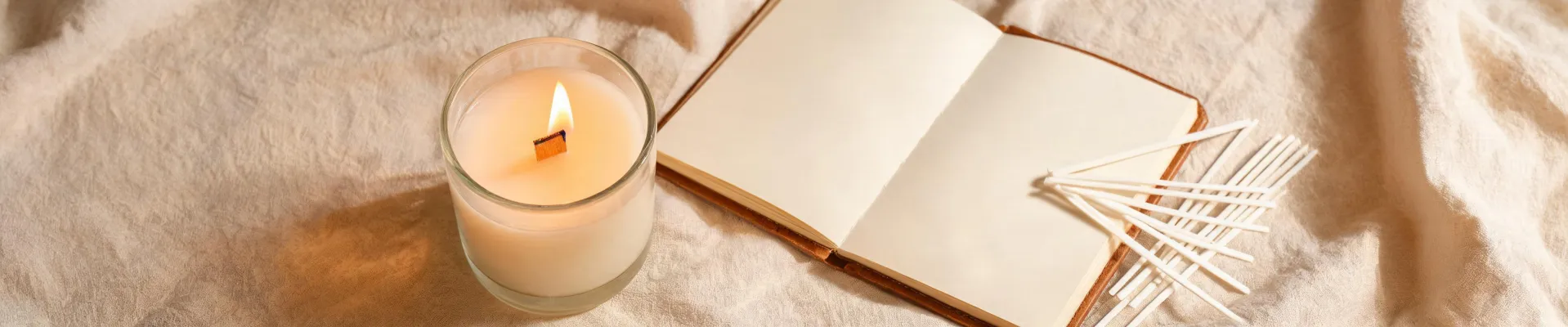
WoodWick Candles vs. Tea Sets as Promotional Products: A Corporate Gift Buyer's Comparison
2026-08-17 / Elise Laurent
If you're sourcing corporate gifts this year, you've probably seen two categories on the shortlist: WoodWick candles and tea sets. They both look “safe” in a proposal. They're both giftable. They both suggest someone put in effort. But they behave very differently once a recipient opens the box.
I've been handling gift and promotional product orders since 2017. In that time, I've personally made (and documented) 14 significant mistakes—roughly $18,000 in wasted budget. One of those mistakes was a custom tea set order where I approved a logo proof that didn't match the brand's Pantone color. The whole run looked “close enough” in the PDF and clearly wrong in person.
This article compares the two, dimension by dimension, from a buyer's perspective. Not a packaging engineer's perspective. Not a brand manager's. From the person who has to sign the PO, set the timeline, and answer the follow-up questions.
One more thing before the comparison: the checklist I maintain now has four questions. Does it need instructions? Can it be branded without a huge MOQ? Can it arrive intact? Would I use it if I received it? This article is that checklist applied to two popular gift categories.
The Comparison Framework
Here's the framework I use when comparing any two promotional products:
- Will the recipient actually use it?
- How much “how-to” burden does it create?
- Can we customize it without breaking the budget or the brand?
- What's the total cost, including setup, freight, and mistakes?
- Does the supplier treat a small order with respect?
Now let's put WoodWick candle gift sets and tea sets through that framework.
Dimension 1: Will the Recipient Actually Use It?
This is the first question I ask about any corporate gift, because the best gift is the one that doesn't end up in a cabinet.
A tea set requires a few extra steps. The recipient has to want tea, own a kettle, have loose tea or bags handy, and be willing to wash ceramic pieces afterward. If they already own a tea set, yours becomes the backup set. It's not a bad gift; it just has a higher chance of staying in the box.
A WoodWick candle is easier to use tonight. You light it, you hear the wooden wick crackle, and the room starts to smell like whatever scent you picked. There's no pairing required. No cleanup. If the recipient doesn't like scented candles, they can pass it along—but at least it's compact and easy to regift.
For busy corporate recipients, friction kills usage. On this dimension, WoodWick candle sets get the edge for most audiences. Tea sets are only a better fit when the recipient's industry or lifestyle already gives tea an active role.
Dimension 2: The “How to Use” Burden
This is where a lot of buyers miss the point. Most buyers compare per-unit price and completely miss the instruction burden that comes with certain gifts.
If you're the buyer responsible for writing the insert card, the phrase “how to use tea set” should be a red flag. It means the gift comes with homework.
With a tea set, you're explaining water temperature, leaf quantity, why to rinse the pot, and what not to put in the microwave. That's a lot of instructions for a gift that's supposed to feel simple.
A WoodWick candle isn't a zero-instruction product either. The wooden wick should be trimmed to about 1/4 inch before the first burn. The first burn should last 2–3 hours so the melt pool reaches the edge. And it should stay away from drafts. If you've never used one, that can sound like a lot.
I'm not a candle scientist, so I can't speak to the wax chemistry behind the first-burn rule. What I can tell you from a buying perspective is that the instruction load is lighter. A tea set needs steps before the recipient can enjoy it. A candle needs one spark. The crackle does the rest.
Dimension 3: Customization and Branding
Custom tea sets can be gorgeous. A matte ceramic teapot with a laser-etched logo feels premium. But premium comes with setup costs, custom packaging design, heavier freight, and breakage risk. You're also committing to a quantity that might be bigger than you need.
WoodWick candle sets give you more entry points. You can add a branded outer sleeve, a custom label, a printed care card, or a simple logo tag with ribbon. You can create a proper gift set in a run of 50 to 100 units without stretching the budget. For a first test, that's a much smarter starting point.
If you're buying for Q4, red WoodWick candles are an easy way to make the gift feel seasonal without a full custom packaging redesign. The red jar works as a visual anchor for the holidays. But red is a popular color, and inventory runs out fast. A “WoodWick candles Black Friday” promotion needs to be planned before the holiday rush, not after.
One note on branding: don't trust a PDF proof for color. The Pantone Color Matching System guidelines put acceptable tolerance for brand-critical colors at Delta E < 2. That's a much tighter standard than “it looks close on my monitor.” If your custom label has a strict brand color, ask for a physical proof before the full run. (Should mention: this tip comes from the $4,700 tea set mistake I made in 2019.)
Dimension 4: Total Cost, Minimums, and Lead Time
Most buyers compare per-unit price and ignore everything after it. But the total cost of a promotional product includes the base product, setup fees, artwork proofing, shipping, rush freight, and the cost of replacing broken or wrong items. The lowest quoted unit price is rarely the lowest total cost.
Tea sets have more moving parts. More pieces mean more breakage risk, more packaging material, and more chances for a missing cup. WoodWick candle gift sets are simpler. The jars can still break if the box is packed badly, but the supply chain risk is easier to manage.
Lead time is another difference. Custom ceramic tea sets often need 6–10 weeks in my experience. Ready-made WoodWick candle gift sets can be much faster if you add a branded sleeve instead of a custom jar. That speed matters when your event date isn't flexible.
Honestly, I'm not sure why some suppliers quote a 15-day lead time and deliver in 10, while others quote 7 and deliver in 14. My best guess is that fast quoters are talking about production only, while slow quoters build in buffer. Either way, get a written commitment, not a ballpark.
Last September, I planned a WoodWick candles Black Friday promotion for a financial advisory firm. I assumed a two-week lead time would be fine. It wasn't. We had to pay rush freight, and the red WoodWick candles were already allocated to bigger orders. The lesson: when holiday demand is involved, the vendor's own Black Friday rush is part of your supply chain.
I'm not a logistics expert, so I can't speak to carrier optimization. What I can tell you from a procurement perspective is to confirm the delivery date in writing and build in at least 3 business days of buffer before your event.
Dimension 5: Small Orders and New Relationships
Small doesn't mean unimportant—it means potential. I've seen this play out in my own order history. When I first ordered branded candle favors, I needed only 40 units. One supplier told me the quantity wasn't worth their time. The supplier I ended up using made 40 units, shipped them on time, and answered every email. That supplier now gets my larger orders.
I'm not saying every supplier should offer tiny minimums. High MOQs are a legitimate business model. But if you're a small company testing a new idea, find the supplier who meets you where you are. In my experience, candle gift sets have a lower entry point than custom tea sets, which makes them friendlier for first-time corporate programs.
At least, that's been my experience with professional services firms and local businesses. Larger enterprise programs may have completely different economics.
Bottom Line: Which Should You Buy?
There isn't one universal winner. It depends on your recipient, your timeline, and your budget.
Buy WoodWick candle gift sets if you want a gift with higher daily usage, lower instruction friction, easier small-batch customization, and a simpler unboxing. They're especially strong for Q4 programs when red WoodWick candles and holiday scents can do the seasonal work for you.
Buy a tea set if your client is in tea, restaurant, hospitality, or a market where tea culture plays a central role. Tea sets also work when the gift is meant to be displayed rather than consumed, or when you have the lead time and budget for custom ceramic.
If you're still on the fence, test both with a small group before committing to a large run. I once split a pilot order: tea sets for one office, WoodWick candles for another. The candle office had zero follow-up questions. The tea set office had three people ask “how do you use this exactly?” That data was worth more than any sales sheet.
Bottom line: the best promotional product is the one that survives friction—packaging, instructions, lead times, and recipient indifference. WoodWick candles have a low-friction advantage in most corporate gifting scenarios. Tea sets can win on brand alignment, but they demand more from you and your recipient. Choose the one you can execute well at the size you're actually ordering.

Elise Laurent
Elise Laurent is a crystal and decorative glass quality analyst covering crystal figurines, vases, ornaments, suncatchers, and gift glassware. She examines ISO 6486-1 where food-contact glass dinnerware applies, then uses polarized strain inspection, dimensional checks, surface-defect grading, and refractive clarity to compare decorative pieces outside that scope. Her work helps sourcing teams choose materials, finishing routes, and protective packaging without confusing visual brilliance with verified durability.