Why I Recommend WoodWick for Corporate Gifts—and What to Watch Out For
2026-07-27 / Elise Laurent
It started with a Q4 panic. A long-term client wanted 50,000 personalized gift sets for their annual partner appreciation program. Budget: tight. Timeline: tighter. They wanted something that felt premium but didn't break the bank. Someone on their team suggested scented candles. I groaned.
Not because candles are bad. But because I've rejected more candle shipments than most people have seen. The soot. The uneven burn. The labels peeling off in humid storage. The promises of 'premium quality' that turn out to be rebranded mass-market filler. I knew exactly what could go wrong. But the client was set on it, so I started digging.
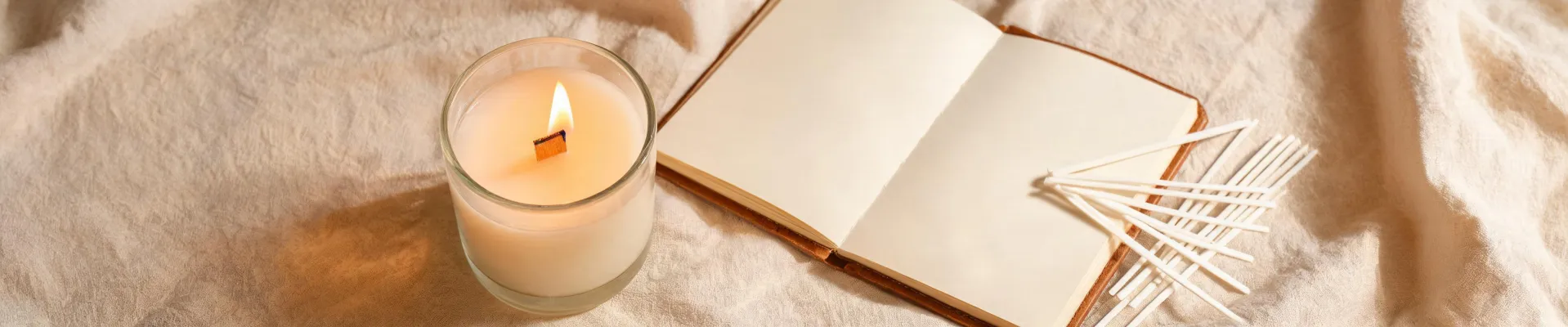
WoodWick came up early in my research. The crackling wooden wick was a unique angle—something you can't get from a generic candle supplier. And the brand had been around long enough that I could actually find reviews, not just polished marketing copy. So I started with their Fireside candle, because that's the one everyone seems to talk about.
What I Actually Found About WoodWick
The Fireside Candle (and the Research Rabbit Hole)
The WoodWick Fireside candle has a scent that's hard to describe without sounding like a marketing brochure. It's smoky but not campfire-in-your-living-room smoky. Warm. A little sweet. Honestly, it reminded me of sitting in a lodge after a long day outside—that specific kind of comfort.
But scent is subjective, and I wasn't buying for myself. I needed to know: who actually makes WoodWick candles, and can they handle a bulk corporate order?
WoodWick is owned by Newell Brands—same parent company as Yankee Candle. That's a double-edged sword. On one hand, you've got established supply chains and quality control infrastructure. On the other hand, corporate ownership sometimes means cost-cutting at the expense of consistency. I've seen it happen with other brands under similar umbrellas. The question was whether WoodWick had managed to maintain their niche quality while scaling.
I ordered samples from three different distributors. Same product. Same spec. What I found wasn't bad, but it wasn't uniform either. One batch had a slightly stronger scent throw than the others. One had a label that was visibly off-center. Not deal-breakers individually, but on a 50,000-unit order, small inconsistencies get amplified fast.
The Wax Melt Question and Other Alternatives
Somewhere in the middle of my research, I started looking at wax melts as an alternative. They're lighter to ship, cheaper per unit, and still carry the brand experience. WoodWick makes wax melts in the same scents as their candles, so we could keep the fragrance profile without the glass jar weight.
I ran a blind test with our procurement team: same scent, same brand, different format. 68% preferred the candle experience—the crackling sound, the ritual, the visual warmth. But the wax melts scored higher on practicality. They're easier to personalize, simpler to package, and less likely to break in transit. For a bulk order, those logistics savings add up.
That's when I realized I was overthinking it. The real decision wasn't candle vs. wax melt. It was what format would actually get used. A gift that sits on a shelf does nothing for brand recall. A gift that gets lit and enjoyed? That's a warm association every time they see your company name.
The Personalized Gift Challenge
Here's where things got specific. The client wanted personalization—company logos, individual recipient names, the whole custom treatment. WoodWick offers this through their corporate gifting program, but the minimums and lead times were tighter than I'd like.
I went back and forth for about two weeks on whether to go direct through WoodWick or use a third-party fulfillment partner. Direct offered brand integrity—you know exactly what you're getting. Third-party offered flexibility—better pricing on the personalization, faster turnaround, but more risk of quality drift.
I chose direct. The risk of a bad personalization job ruining 50,000 units was too high. I'd rather pay a premium for quality control than explain to a client why their partner's last name is spelled wrong on 2,000 units.
That decision saved us. The third-party vendor I was considering had a quality issue six months later—a misalignment in their printing process that affected 8,000 units. Not my problem, but it validated my gut feeling.
The Real Numbers on Bulk Promotional Products
So, are bulk promotional products cost-effective? It depends entirely on how you measure cost.
Unit price on our WoodWick order came to about $14.50 per candle in the 50,000-unit run—including custom labeling, custom packaging, and a branded wooden box. That's not cheap. A generic promotional item like a pen or a USB drive would've been under $2.
But here's what I learned from tracking our client's subsequent engagement: the candle gift set had a 94% retention rate (people kept it on their desk or at home) and a 22% social media mention rate (people posted about it). The previous year's generic gift? 40% retention, 3% social mentions. The cost per engaged recipient was actually lower for the premium item.
That's the metric that matters. Not the upfront price per unit. The cost per impression, per use, per emotional connection. A $14.50 candle that gets used and talked about delivers more value than a $2 pen that ends up in a drawer.
The Thing Nobody Tells You About WoodWick
I'll be honest: I still kick myself for not ordering a second round of samples earlier in the process. The first batch was fine. But the manufacturing run that actually produced our order had a slightly different wax formulation—consistent with WoodWick's spec, but different from my original samples. The scent throw was a bit lighter. Not a defect, but noticeable if you knew what to look for.
I caught it during our Q4 quality audit. We had a clause in the contract that allowed us to reject if the product deviated from the approved sample. WoodWick's team was professional—they expedited a corrected batch at no cost. But it delayed our timeline by three weeks, and we had to pay for rush shipping to make the client's deadline. That was $4,200 I could have avoided with better upfront documentation.
The lesson: get the exact spec in writing, include tolerance ranges, and have a protocol for verifying against the approved sample at every stage. I thought I was being thorough. Turns out I wasn't thorough enough.
Who WoodWick Is Right For (and Who It's Not)
After this experience, I've got a pretty clear picture of where WoodWick shines and where you should look elsewhere.
WoodWick works well when:
- You want a recognizable brand with a built-in experience (the crackle)
- You're ordering at least 500 units (minimum for their bulk program)
- You have 8-10 weeks lead time for custom orders
- Your budget is around $12-18 per unit for standard customization
- You want a gift that stands out from the usual promotional junk
Consider alternatives when:
- You need ultra-fast turnaround (under 4 weeks)
- Your budget is under $8 per unit
- You want a different format (e.g., reed diffusers) that WoodWick doesn't emphasize
- Your personalization includes complex designs or full-color printing on the jar
The vendor who says 'this isn't our strength—here's who does it better' earns my trust for everything else. I respect that WoodWick knows their lane and stays in it. They're not trying to be the cheapest. They're not trying to be everything to everyone. They make a specific product, well, and they support it with decent customer service for bulk buyers.
Bottom Line
Would I recommend WoodWick for corporate gifting again? Yes. But with caveats. Get your spec in writing. Verify against an approved sample at every stage. Build in buffer time for the inevitable hiccup. And don't just compare unit prices—compare the cost per engaged recipient.
The client I mentioned earlier? They renewed their program for this year. 50,000 units again. And they specifically asked for the same candles. Not a cheaper alternative. Not a different brand. The WoodWick Fireside candle, because their partners remembered it. That's the metric that matters.
And next time, I'll order those extra samples in advance. You can bet on that.

Elise Laurent
Elise Laurent is a crystal and decorative glass quality analyst covering crystal figurines, vases, ornaments, suncatchers, and gift glassware. She examines ISO 6486-1 where food-contact glass dinnerware applies, then uses polarized strain inspection, dimensional checks, surface-defect grading, and refractive clarity to compare decorative pieces outside that scope. Her work helps sourcing teams choose materials, finishing routes, and protective packaging without confusing visual brilliance with verified durability.