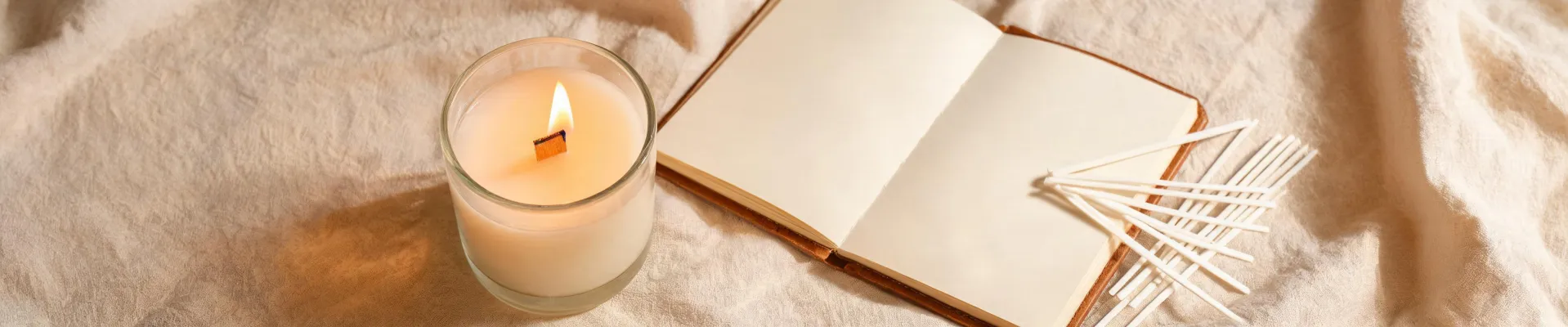
Why I Pay a Rush Fee on WoodWick Candles for Last-Minute Corporate Gifts
2026-09-03 / Elise Laurent
If a corporate client calls me on a Tuesday and needs eighty gifts by Friday, I'm not trying to save 15% on a scented candle. Honestly, I'm not even thinking about the candle itself. I'm thinking about whether a supplier will be straight with me about what they can actually deliver.
I say that from the unglamorous side of the gift business. I'm the person who gets called after the original vendor misses a deadline. Over the last six years, I've triaged more than 200 rush orders for corporate clients, most of them involving candles, gift boxes, and product inserts. My opinion has become pretty firm: I'd rather pay a rush fee on WoodWick candles than risk a lower quote from an unknown source. What I'm buying isn't just the candle. It's certainty.
What a cheap scented candle quote really costs
In March 2024, a client needed sixty welcome gifts for a leadership offsite. The order wasn't huge by our standards—around $2,800 total—but the timeline was. The original supplier had confirmed seven-day delivery. Then they didn't ship. When I called, I got the most expensive sentence in procurement: should leave tomorrow. The event was thirty-six hours away.
We found a regional gift distributor who said they had sixty WoodWick boat candles in stock. In my role, that kind of confirmation is rare. They quoted us $220 extra for next-morning delivery. I said yes immediately. If I remember correctly, the final cost was around $3,100, including boxes, tissue, and a few extra candles we kept as backups.
Some people will read that and think I overpaid by $220 for a brand name. That's the wrong framing. The distributor wasn't charging $220 for the candle. They were charging $220 to pin down a truck, prioritize our pick list, and promise a window they could actually hit. The cheaper option wasn't $220 cheaper. It was a lottery ticket where losing meant an empty gift table at a leadership summit.
The cost of failure wasn't the $2,800 order. It was the contract renewal—worth tens of thousands—plus the walk from the ballroom to the lobby without gifts. The rush fee was insurance, and it was cheap.
Why WoodWick is my default when the schedule breaks
There are plenty of beautiful candle brands. I don't dispute that. But when I'm triaging a rush order, I want two qualities: predictable supply and obvious gift appeal. WoodWick tends to have both.
The wooden wick crackle isn't just a gimmick. I've watched people open a WoodWick gift box and stop mid-conversation when they hear it. That's a memorable unboxing moment, and it matters when your logo is on the box. The product line also has enough range—jars, the WoodWick boat candle, reed diffusers, wax melts—to hit different gift tiers without making us source everything from five suppliers.
A candle holder can do the same thing. I'm not talking about heavy crystal. With jar candles, the jar already acts as the holder. But if you add a tray or a small stand, the gift stops being a candle in a cardboard box and starts looking like a home décor item. Last year we tested a five-dollar tray under a WoodWick jar. It wasn't expensive, but recipients kept the tray on display. In corporate gifting, that visible staying power is worth a lot.
The wax bead question nobody asks
Let me answer the direct question first: how long does it take to melt wax beads? In most electric wax warmers, 15 to 20 minutes is enough for a full pool. Actually, in low-watt warmers or an overfilled dish, it can be closer to 30. With a tea-light warmer, give it even longer. I'm not a chemist, so I won't get into flashpoints or fragrance load. What I can tell you from a purchasing perspective is that melt time is rarely the real issue.
The issue is whether the wax beads show up. Wax melts make sense for corporate gifts because they're light, cheap to ship, and hard to break. But they aren't automatically a safe last-minute choice. I've received wax melts that arrived clumped, half-melted from sitting in a hot delivery truck, or with no safety labeling. None of that showed up in the online product photo. Melt time was irrelevant.
If your deadline is short, ask the supplier for a photo of the actual stock and a written delivery commitment. If they hesitate, that's your answer.
Cracker Barrel candles WoodWick: a surprisingly useful signal
The Cracker Barrel candles WoodWick connection comes up with clients more than you'd expect. I'm not sure whether people are looking for the store's selection or just describing where they first saw the brand. Either way, the retail presence matters to me.
A candle brand that sits in national stores has to meet labeling rules, packaging standards, and replenishment schedules. That means the company has systems I can rely on when an order has to move fast. A small-batch maker might produce a better scent, but it can't always produce 300 identical units in four days. When I order for a corporate client, consistency matters as much as the smell.
What if a cheaper candle would've been fine?
Maybe it would've been fine. I won't argue with that.
The objection I hear from internal people is always the same: why pay for a recognizable brand if the recipient never sees our logo? The answer is risk, not vanity. A known brand carries inventory data, packaging specs, and distribution infrastructure. Those are the things that prevent Friday panic. A cheaper source might work out great, but might isn't a delivery date. Wait, I should limit that. For a one-off order with no deadline, buy whatever makes sense. The calculus only changes when the schedule is tight.
I also don't think expensive automatically equals reliable. I've worked with small independent candle vendors who were faster and more careful than large ones. If a small vendor can give me real stock numbers, a confirmed truck, and a backup plan, I'll take that quote. My rule isn't buy the expensive brand. My rule is verify the promise. At the last minute, an established product with established stock routes is simply easier to verify.
The bottom line
So here's my firm, slightly inconvenient conclusion: when you order corporate gifts against a deadline, stop optimizing for the lowest quote. Ask two questions. Will the vendor commit to a delivery time in writing? And what happens if they miss it? If the answer has no backup plan, the savings are imaginary.
I've watched a six-figure account get damaged over a box of candles that arrived two days late. The client didn't care why. They cared that we promised a date and missed it. A rush fee on WoodWick candles isn't an indulgence. It's how you make a promise more real.

Elise Laurent
Elise Laurent is a crystal and decorative glass quality analyst covering crystal figurines, vases, ornaments, suncatchers, and gift glassware. She examines ISO 6486-1 where food-contact glass dinnerware applies, then uses polarized strain inspection, dimensional checks, surface-defect grading, and refractive clarity to compare decorative pieces outside that scope. Her work helps sourcing teams choose materials, finishing routes, and protective packaging without confusing visual brilliance with verified durability.