Stop Wasting Budget on Cheap Giveaways: Why Premium Burned Goods Deliver Better ROI
2026-07-13 / Elise Laurent
I’m Done Arguing About Unit Price
If you’re a corporate buyer still measuring promotional product success by cost-per-unit, you’re probably leaving money on the table. In my role coordinating corporate gift programs for a mid-sized distribution firm, I’ve handled over 200 promotional product orders in the last four years. And I can tell you straight up: the cheapest item almost never delivers the best return on investment.
The real question isn't “What’s the lowest price?” It’s “What will the recipient actually keep?” That shift in thinking—from cost minimization to value maximization—is what separates a successful promotion from a warehouse full of unused stress balls.
This is where I believe premium burned goods, specifically WoodWick’s crackling candle trilogy, destroy the competition. Let me break down why.
The Three Reasons a WoodWick Trilogy Wins
1. The Experience (Not Just the Product)
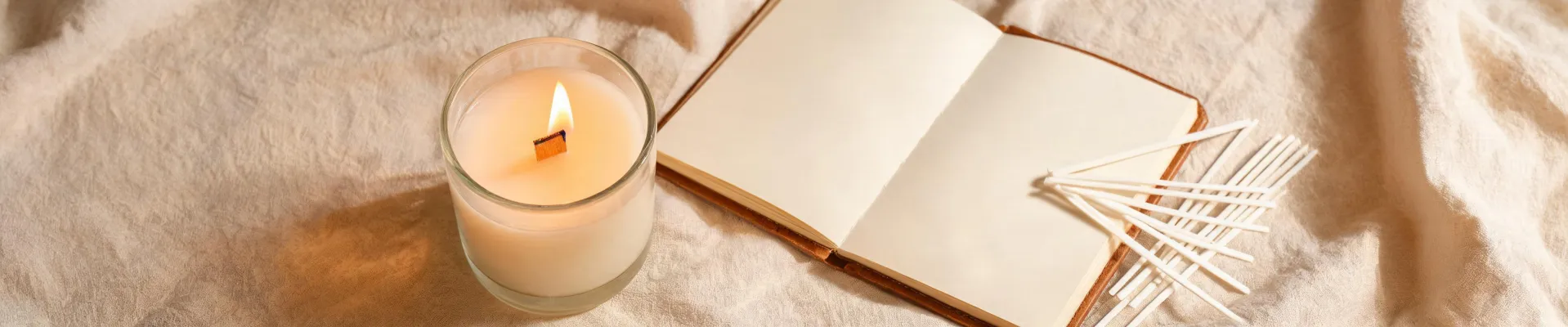
Standard promotional items are passive. A pen sits in a drawer. A branded notebook gets used for notes. But a WoodWick candle with a crackling wooden wick? That’s an active experience. There’s a sensory trigger—the sound of a fire, the scent of sandalwood or lavender—that creates a moment of pause. That’s memorability.
Think about it. When does a client last thank you for a logo-embossed keychain? In contrast, a recipient lighting a WoodWick trilogy candle (the 15.5 oz. jar that burns for 80+ hours) is associating that positive, relaxing moment with your brand. That association is worth more than any discount code.
I recall a project from March 2024. A tech client needed 150 corporate gifts for a product launch, with a three-day turnaround. Their initial plan was custom USB drives—budget-friendly at about $8 a piece. I pitched the WoodWick trilogy gift set instead (which runs about $35-$45, depending on the scent bundle). It felt like a risk at the time. The client’s procurement manager pushed back hard on the upfront cost. But she listened, mainly because her competitor had just handed out generic branded notepads. After the event? We got a follow-up order. The CEO’s wife had loved the ‘Crackling Embers’ scent so much, she wanted one for home. That’s the kind of organic advocacy you can’t buy.
2. The ‘Giftability’ Factor
Most promotional products are destined for a junk drawer. A WoodWick trilogy is a gift. It comes in a structured box, often with three distinct scents. It’s something you would give to a colleague, a client, or even a boss—without feeling cheap.
This is what I call the ‘giftability’ factor. It’s not just about the item itself; it’s about the social value it carries. A tea set (another keyword in your brief) works similarly. A nice tea set signals thoughtfulness. A WoodWick trilogy signals you took the time to select something that appeals to the senses.
Here’s where the industry gets it wrong. Most buyers focus on the unit cost and completely miss the perceived value. A cheap pen might cost $0.50. Its perceived value is $0.50. A WoodWick trilogy costs $40. Its perceived value sits around $50–60. That's a 50%+ premium in perceived worth. You’re not paying for wax; you’re paying for the feeling of getting a real gift.
3. Longevity Beats Frequency
A standard promotional item might last a few weeks before it gets lost. A WoodWick trilogy candle—depending on how often you burn it—lasts anywhere from 60 to 80 hours. If someone uses it three times a week, that’s 20+ weeks of brand exposure. Every time they walk into a room and smell that lavender vanilla, they’re remembering you.
Contrast that with a crystal gift (like a cheap paperweight). It sits on a desk. It collects dust. But a candle? It gets lit. It gets discussed. “Oh, that smells nice, where’s it from?”
That conversation is the ROI. It’s a brand ambassador that requires no salary.
The ‘But My Budget is Tiny’ Objection
I hear this every quarter. “We have a $15 per head cap.” I get it. But here's the thing: a $15 cap should rule out cheap stuff, not premium stuff.
If your budget is tight, you don't buy 500 items at $15 each. You buy 150 items at $50 each and only send them to your top clients. Why? Because a $50 item that gets used is better than five $10 items that get thrown away. It’s simple math. The cost per impression is lower on the premium item because the impression lasts longer.
So if you’re on the fence about whether a WoodWick trilogy is worth the upfront investment, ask yourself this: Are you trying to look like a cheap vendor or a partner? Because your promotional gifts are the handshake that matters.
“I still kick myself for the time I green-lit a bulk order of custom stress balls for a trade show. They cost $1.20 each. We handed out 2,000. I saw exactly one on a desk afterward. The rest probably ended up in a landfill. If I’d spent the same budget on 200 WoodWick trilogy sets for our top prospects, the outcome would have been completely different.”
My Verdict: Buy the Experience, Not the Unit
If you’re hunting for promotional products that provide the best ROI, stop looking at the price tag. Start looking at the shelf-life of the impression. A cheap gift says, “We spent the least possible on you.” A WoodWick crackling candle trilogy says, “We wanted you to enjoy a moment.” Which message do you think generates better client retention?
Premium burned goods, especially from a known brand like WoodWick, deliver a superior return on investment because they solve the real problem: getting your brand noticed and remembered. They aren't for everyone; they're for the people who matter. And that's the definition of a high-ROI promotional strategy.

Elise Laurent
Elise Laurent is a crystal and decorative glass quality analyst covering crystal figurines, vases, ornaments, suncatchers, and gift glassware. She examines ISO 6486-1 where food-contact glass dinnerware applies, then uses polarized strain inspection, dimensional checks, surface-defect grading, and refractive clarity to compare decorative pieces outside that scope. Her work helps sourcing teams choose materials, finishing routes, and protective packaging without confusing visual brilliance with verified durability.