Six Years, $180,000, 14 Vendors: Buying WoodWick Candles for Corporate Gifts Taught Me About Hidden Costs
2026-09-02 / Elise Laurent
-
The surface problem: premium gifts that don't wreck the budget
-
Deep cause #1: "Personalized gift" means something different to everyone
-
Deep cause #2: The wooden wick is the feature and the failure point
-
Deep cause #3: The "can I add fragrance oil to a wax melt" trap
-
Deep cause #4: Seasonality and deadlines are hidden cost multipliers
-
What the mistakes actually cost us
-
What I'd do differently (the short version)
Every November, the email lands in my inbox: "We need year-end client gifts. Something premium, not over-the-top. You handle it."
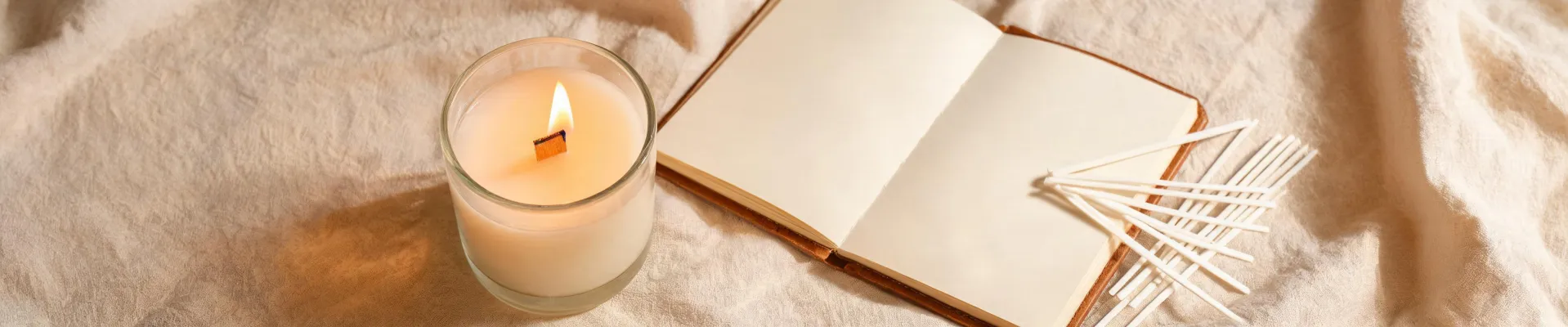
For the past six years, I've handled it. My cost-tracking spreadsheet shows $180,000 in cumulative spending, 60+ orders, and 14 vendors—some outstanding, some I still get irritated thinking about. The product that's consistently carried our gifting program is WoodWick candles. The wooden wick crackles, the Warm Wool scent has been our best performer three years running, and the gift sets bundle easily with other branded swag.
Here's what I wish someone had told me in year one: the candles were never the hard part. It's everything around the candles that eats your budget. If I'd known then what I know now, I'd have saved roughly $14,000—not by chasing cheaper prices, but by asking better questions.
The surface problem: premium gifts that don't wreck the budget
At the start of my procurement career, this looked like a straightforward pricing problem. Find a quality candle, get a volume discount, add the logo, ship before the holidays. Done.
In reality, the unit price was the least informative number in the entire conversation. The real expenses—the ones that decide whether your gift program is a win or a quiet disaster—hide in plain sight.
Deep cause #1: "Personalized gift" means something different to everyone
In 2021, we ordered 250 personalized gift candles from a vendor who quoted $12.40 per unit for genuine WoodWick candles. That price looked fantastic. I approved the proof, paid the deposit, and waited.
They arrived with one glossy round sticker on the front. The edges were already lifting. I said "personalized gift" and meant something that looked designed, considered, worth keeping on a desk. They heard "a label that carries a logo." The mismatch cost us $1,800 in reprint charges, plus a weekend of manual labor stripping failed stickers off 250 jars.
We were using the same words and meaning entirely different things. I discovered that when the boxes opened and my assistant asked whether the stickers were supposed to peel off. Now I ask every vendor to physically describe—or better, show me—the exact finishing process before we choose a customization route.
Deep cause #2: The wooden wick is the feature and the failure point
WoodWick candles have that signature crackling wick—the reason clients actually remember the gift. But the wick is also where quality control gets tricky. A wood wick that's too thick for the container smokes. Too thin, and it drowns in melted wax. The wax blend has to match the wick. It's a beautiful product when it lands right, and a sooty mess when it doesn't.
In 2023, we tested a "comparable" crackling candle from a discount distributor at 30% below the price we were paying. I burned two samples in my office. One tunneled straight down one side; the other produced a smoky flame that left black residue on the jar.
So glad I burned those samples before signing a purchase order. I was one signature away from sending 400 defective candles to our client list. The samples cost me $60. Learning the lesson through a mass order would have cost me clients.
Deep cause #3: The "can I add fragrance oil to a wax melt" trap
Every gift committee I've worked with eventually asks: "These wax melts are nice, but can we add our own fragrance oil? Then we'd have our own brand scent."
I've tested this so you don't have to. Wax melts have a maximum fragrance load—usually 6–10% depending on the wax. Adding oil above that level doesn't make the product smell stronger. It makes the wax bleed oil, form a greasy film on top, and the best-case result is a faintly weird smell. We scrapped an entire custom batch after that experiment.
If you want a brand-specific scent, you need to commission a custom fragrance compound—and that's a real line item with real lead times. Otherwise, choose from the existing range. We've standardized on Warm Wool for most of our orders. It's not the most adventurous choice; it's simply the one recipients mention most often.
Deep cause #4: Seasonality and deadlines are hidden cost multipliers
This is the one that still embarrasses me. In year three, we waited for budget approval until mid-November. Our planned holiday gift—a WoodWick candle paired with a decorative nativity set from a home décor supplier—was listed at $38 per unit in October. By late November, it was unavailable. We sourced the last units from a reseller at $48 each.
That extra $10 on 150 units was $1,500, which we could have avoided entirely with an earlier purchase order. Our procurement policy now has a hard rule: seasonal holiday quantities get locked in by September, no exceptions. That includes nativity sets, seasonal scent bundles, anything with a limited window. It's not about predicting demand. It's about not paying the last-minute tax.
What the mistakes actually cost us
By my spreadsheet, we accumulated $14,300 in avoidable expenses across those six years. Broken down:
- $3,100 in reprinting and relabeling after the sticker disaster
- $4,200 in rush shipping premiums, including an $820 express delivery that arrived after the event anyway
- $1,150 in scrapped product from the fragrance oil experiment
- $2,200 in "setup fees" and "design consultation" charges that never appeared in the original quotes
- $3,650 in seasonal markups and reseller premiums from late ordering
For context on what "premium" actually costs: based on publicly listed retail prices as of January 2025, a standard 13-oz WoodWick jar candle runs $25–30, a gift set goes for $40–60, and a reed diffuser is $25–35. Wholesale pricing through authorized distributors lands 20–40% below those numbers, but only at real order volumes—typically 50 units or more. If a quote looks dramatically lower than those ranges, either it's a grey-market product or it's not the brand it claims to be.
Read that expense list again. Every single category was a cost that emerged after the initial quote. None of them was the candle itself. That's the pattern: product price is where the conversation stops and the budgeting trouble starts.
The harder cost to quantify is relationship damage. A peeling label or a sooty wick tells a client, "we didn't verify this before we sent it." One client's project manager brought up "the candle with the sticker" at a renewal meeting two years later—not angrily, just as a memorable anecdote. It told me exactly how that gift landed. You can't put that on a line item, but it has a way of showing up in renewal terms.
What I'd do differently (the short version)
The fix is boring, which is probably why most people skip it:
- Demand a one-page total cost breakdown before the first order. Unit price, setup, personalization, shipping, warehousing, administrative fees. A vendor who hesitates, or sends a two-page contract instead, is a vendor with something to hide.
- Order a physical sample, burn it, and live with it for a week. Check how it smells after sitting in a shipping box. Check whether the label survives. Check whether the wooden wick burns clean.
- Don't modify fragrance products. Adding fragrance oil to a wax melt isn't customization; it's waste. Order from the scent list or budget for a true custom fragrance.
- Lock seasonal orders early. September for holiday gifts. No exceptions.
In my experience, the vendor who lays out every fee upfront—even when the total looks higher than a competitor's headline price—is almost always the cheapest vendor by the time the final invoice lands. I've learned to ask "what's not included?" before I ask "what's the price?"
Part of me still wants to recommend the easy route: standardized gift cards, zero logistics. Another part knows a well-executed WoodWick candle is a gift people actually reference a year later. I've resolved that tension by keeping the candles and making every vendor prove their transparency before they earn a purchase order.
That's the mindset that took our gifting program from a recurring fire drill to a predictable, on-budget operation. The crackling sound is a nice bonus—it just doesn't show up on the budget line. And that's exactly how it should be.

Elise Laurent
Elise Laurent is a crystal and decorative glass quality analyst covering crystal figurines, vases, ornaments, suncatchers, and gift glassware. She examines ISO 6486-1 where food-contact glass dinnerware applies, then uses polarized strain inspection, dimensional checks, surface-defect grading, and refractive clarity to compare decorative pieces outside that scope. Her work helps sourcing teams choose materials, finishing routes, and protective packaging without confusing visual brilliance with verified durability.