8 Questions Corporate Buyers Ask About Woodwick Candles (Answered by Someone Who's Made the Mistakes)
2026-07-16 / Elise Laurent
-
What Corporate Gift Buyers Actually Want to Know About Woodwick Candles
-
1. Why Choose Woodwick Candles for Corporate Gifting?
-
2. Are Woodwick Candles Non-Toxic?
-
3. How to Choose the Right Fragrance for a Corporate Audience?
-
4. How Do You Make Diffuser Oil?
-
5. Is There a Minimum Order Quantity?
-
6. Can We Put Our Company Logo on WoodWick Candles?
-
7. Are Woodwick Candles Safe to Ship?
-
8. What About the Woodwick Humidor Questions?
-
The Honest Summary
What Corporate Gift Buyers Actually Want to Know About Woodwick Candles
I've been handling corporate gift orders for a little over 6 years now. When I first started, I assumed the biggest challenge was just finding products people would actually like. I was wrong. The real headaches start when you're ordering 200+ units of something you thought you understood.
Here are the questions I get most often—and the answers I wish I'd had when I started.
1. Why Choose Woodwick Candles for Corporate Gifting?
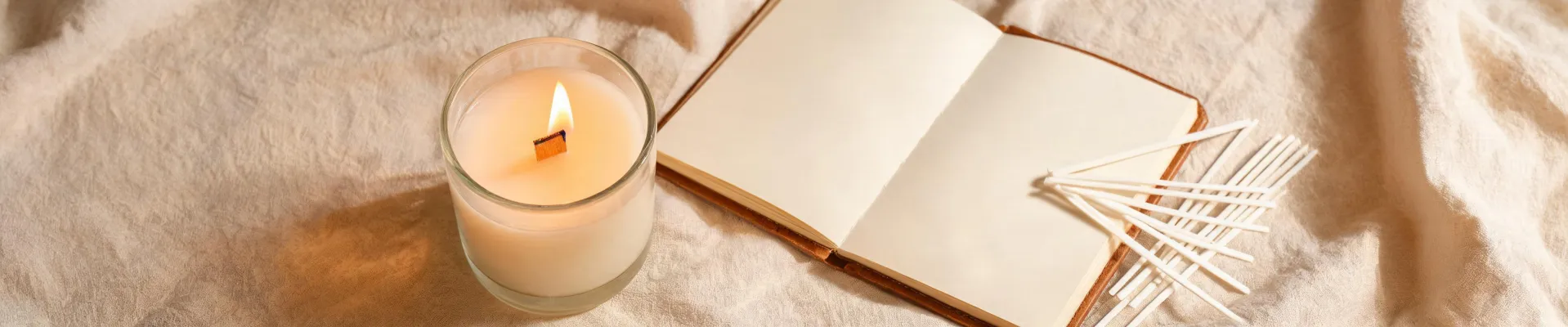
Short answer: They're memorable. Seriously. The crackling wooden wick is the main differentiator. People don't just see a candle—they hear it. That sensory hook makes people remember who gave it to them.
But here's what I didn't realize at first: the wick type matters for function too. Wood wicks create a wider melt pool than cotton wicks, which means better scent throw. If you're branding your gift with a logo or a short message on the jar, that scent stays in someone's office for 40-60 hours. Talk about passive branding.
My first year, I ordered standard cotton-wick candles from a different supplier because they were $2.50 cheaper per unit. Nobody commented on them. Nobody remembered them. Switched to WoodWick the next year—response was totally different.
(Should mention: I always verify the wick type for each SKU now. WoodWick uses FSC-certified wood for their wicks. That's a detail that matters if your company does sustainability reporting.)
2. Are Woodwick Candles Non-Toxic?
This comes up a lot in corporate procurement. And to be fair, it's smart to ask.
WoodWick candles use a proprietary wax blend. I'm not going to tell you they're 100% soy (unless the specific product line says so—always check the box). But they are:
- Lead-free wicks (wood wicks are inherently lead-free, which is a plus)
- Phthalate-free in their fragrance oils
- Free from paraffin wax in most of their core lines
Now, I'm not a chemist. I'm a buyer who learned to read spec sheets the hard way. My rule of thumb: always request the MSDS (Material Safety Data Sheet) for any candle you're ordering in bulk. It lists all ingredients and any hazard classifications. I keep a binder of these for every candle SKU we've ordered since 2022. Makes audits way easier.
Take this with a grain of salt: regulations vary. Per the FTC Green Guides (ftc.gov/green-guides), environmental or health claims on products need substantiation. So if a supplier tells you it's "100% non-toxic," ask for the evidence.
3. How to Choose the Right Fragrance for a Corporate Audience?
I learned this the expensive way.
In 2023, I ordered 500 cashmere-scented candles for a tech company's employee appreciation kits. Smelled great to me. But the feedback forms came back with comments like "smells like my grandma's house." Ouch.
Here's what I've learned:
- Safe bets for mixed audiences: Lavender, Sandalwood, Vanilla, Citrus blends—these are generally crowd-pleasers
- Ask about the setting: Open office? Something subtle like Sage & Cedar. Home office? Bolder scents like Mahogany work
- Seasonal matters: Spiced Apple in fall, Fresh Linen in spring—align the scent with when they'll receive it
Oh, and always order one sample of each fragrance before committing to volume. I should add that: I once approved a scent based on the cold throw (smelling the wax cold). The hot throw was way different. Now I burn every sample first.
4. How Do You Make Diffuser Oil?
This is a question I get from clients thinking about custom scent blends for their brand. Let me clarify something: I don't make the oil. But I've worked with suppliers who do, and here's the simplified version for context:
Diffuser oil is essentially fragrance oil mixed with a carrier. A common base is a combination of dipropylene glycol and cyclomethicone. The fragrance oil is typically added at 20-30% concentration for reed diffusers.
But honestly? Don't try to DIY this for corporate orders unless you have a lab and testing process. You need stability testing (light, heat, time) to make sure the oil doesn't separate or discolor. I've seen $1,200 worth of clear oil turn brown in 3 weeks. Not a risk worth taking for branding.
My approach: stick with established products for volume orders, and only consider custom scents if you're order is 500+ units and you have budget for R&D.
5. Is There a Minimum Order Quantity?
Yes—but not what you might think. If you've ever tried to order a small batch from a manufacturer who only does container orders, you know the pain.
The good news: WoodWick has a corporate sales channel that handles smaller quantities. I've placed orders for as few as 24 units for a client's leadership team gift.
When I was starting out, the vendors who treated my $200 orders seriously are the ones I still use for $20,000 orders. That's part of why I recommend WoodWick for corporate gifting—they don't gatekeep based on order size.
Now, the larger the order, the more leverage you have on pricing. For 100+ units, you can usually negotiate a discount. For 500+, you might be able to request custom jar colors or private labeling.
6. Can We Put Our Company Logo on WoodWick Candles?
Short answer: generally, yes—depending on the glass shape and lid type.
Most WoodWick candle jars have a metal lid. If you're doing screen printing, the metal lid can be printed with a logo. Some clients do a small sticker on the jar itself, but that can look cheap if not done well.
For higher-end orders (think 200+ units), you can often request:
- Custom labels on the jar
- Engraved wood lids (for lines that have them)
- Custom-printed packaging boxes
I'd recommend budgeting around $0.50-$2.00 per unit for branding, depending on the method. Take this with a grain of salt: pricing varies by vendor and complexity. Always get quotes for three different branding methods before deciding.
7. Are Woodwick Candles Safe to Ship?
Yes—but there are rules.
Candles are considered consumer commodities but may be classified as hazardous materials if they contain certain fragrance oils (especially if the flash point is below 140°F). According to USPS (usps.com), candles are generally acceptable for ground shipping, but air shipping restrictions apply for flammable liquids.
For corporate orders, I always use ground shipping for candles unless the client specifically requests air. Saves money and avoids compliance headaches.
One more thing: wax can melt in transit during summer. I learned this when a shipment of 80 candles arrived as a waxy blob in June 2022. Now I specify climate-controlled shipping for orders over $500 during June-September. Cost about $30 extra—saved $2,800 in replacement product.
(Under federal law—18 U.S. Code § 1708—only USPS-authorized mail may be placed in residential mailboxes. For corporate gifting, always use a shipping service that delivers to the front door or mailroom.)
8. What About the Woodwick Humidor Questions?
I get asked if WoodWick candles can be used in humidors. Let me clear that up:
The "Woodwick Candles Humidor" keyword means someone is searching for a candle that maintains cigar humidity. But candles are not humidifiers. They burn oxygen and produce heat—they're completely different devices.
If you're looking for a cigar-themed gift, the WoodWick Whiskey & Tobacco scent is a better fit. It smells like a leather club chair—very masculine. But don't put it in an actual humidor. The heat and soot could damage the wood and cigars.
I should add that: for cigar shop or lounge promotional products, candles with woody and spicy scents (like Sandalwood, Oud, Leather) are great. Just keep them away from the actual cigars.
The Honest Summary
Corporate candle buying isn't rocket science. But it is about details:
- Wick type – Wood wicks = unique sensory experience
- Non-toxic claims – Ask for MSDS sheets, don't just trust labels
- Fragrance selection – Sample first, think about the audience
- Order size – You can start small and scale up
- Branding – Get quotes for three methods
- Shipping – Ground only, watch summer heat
Take it from someone who's melted a $2,800 order and sent candles that smelled like a retirement home: the preparation matters more than the product. Get the specs right, and the gift itself will do the work.

Elise Laurent
Elise Laurent is a crystal and decorative glass quality analyst covering crystal figurines, vases, ornaments, suncatchers, and gift glassware. She examines ISO 6486-1 where food-contact glass dinnerware applies, then uses polarized strain inspection, dimensional checks, surface-defect grading, and refractive clarity to compare decorative pieces outside that scope. Her work helps sourcing teams choose materials, finishing routes, and protective packaging without confusing visual brilliance with verified durability.