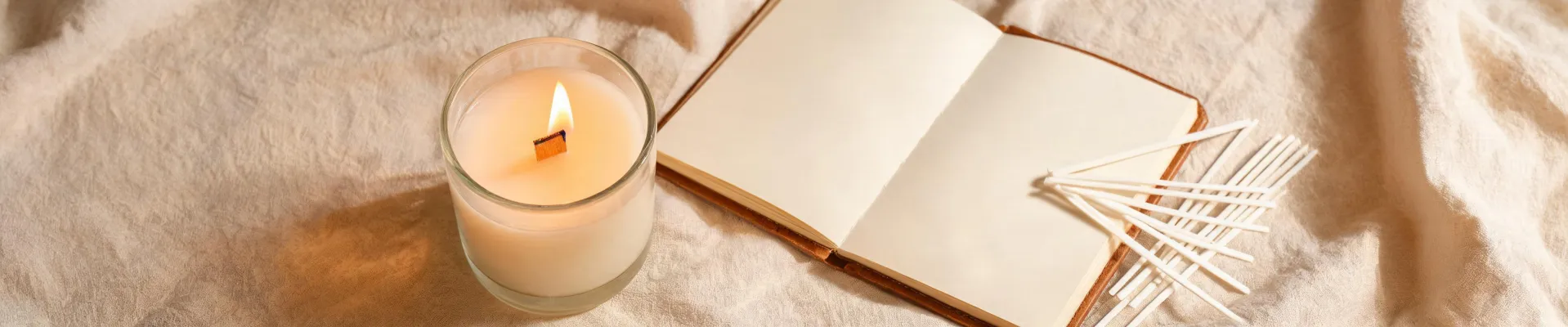
500 WoodWick Candles, 9 Days, and the $4,600 Lesson About Certainty
2026-08-31 / Elise Laurent
Last October, I took a call that turned our week upside down. A corporate client needed 500 WoodWick Coastal Sunset candle gift sets for their annual partner appreciation event. The event was nine days away. Normally, we'd want thirty.
"Can you make it?" they asked. That's the same question I get from event planners, promotional buyers, and HR teams almost every week. My answer is usually the same: it depends on how sure you need to be.
A Familiar Kind of Chaos
I'm a quality compliance manager at WoodWick. I review every candle that ships for corporate orders—roughly 2,000 units a month. In four years of this role, I've learned the candles aren't usually the problem. It's the deadline.
This client ordered Coastal Sunset, one of our best-selling scents—notes of apple, sea salt, and coconut. Warm but not heavy, which makes it a safe and thoughtful pick for professional settings. They paired each medium jar with our glass candle holder plus a small crystal gift piece, one of those engraved paperweights financial firms love to hand out alongside a quality candle. A common combo, actually.
The complication wasn't the product. It was the timeline. Nine days for production, quality verification, packaging, and freight. That meant the rush production line and expedited shipping. Around $3,800 in extra fees on top of the order.
"That's steep," the client said. "What if we saved on the shipping and went standard? It's still a week. Should make it."
I get why people hesitate. Rush fees feel like a tax on impatience. But I've seen too many "should make it" orders fail. In March 2024, a smaller order missed a major industry event because the buyer saved $240 on standard freight. The total damage—lost trust, rework, and the relationship—ended up somewhere around $8,000. The $240 saving became the most expensive discount that company ever took.
The Questions That Always Come Up
Then came the question that follows every WoodWick order: "Do wood wick candles last longer?"
I understand where it comes from. There's a belief that wooden wicks burn faster than cotton ones, so the candles must not last as long. That thinking is a leftover from the early days of wood wick candles, more than a decade ago, when some manufacturers used wicks that weren't properly matched to their wax. Today, the wick and wax are developed together as a system.
Burn time is mostly about the wax blend, not the wick material. WoodWick uses a proprietary formula designed for the wooden wick. If you trim the wick to about ⅛ inch—the National Candle Association's standard guidance—and give the candle a full first burn, you get a clean, even burn with minimal wasted wax. Our production process also follows ASTM F2417, the standard specification for candle fire safety, so every batch is tested for safe burn behavior before it leaves the facility.
Can I claim a wood wick candle burns longer than any other candle? No. There are too many variables. But I can tell you the burn experience is what clients remember: the crackle, the wider flame, the way the scent fills a room. That's often worth more than burn-time math, especially for a gift.
The client also asked about the wax. "How long does it take hard wax to melt?" They were already thinking about the event timeline—which is smarter than most. For a medium jar, plan on 20 to 35 minutes to get a full melt pool on the first burn. Room temperature and drafts shift that a bit. But here's what I really told them: don't blow it out before the wax melts to the edges of the jar, or you'll get tunneling. That wastes wax and shortens the candle's life. I suggested lighting everything about 45 minutes before doors opened. That gave the candles time to settle into a clean, even burn. It's a small detail that becomes a big one when you see a premium candle tunnel at an important dinner.
The Night We Nearly Missed It
Production ran Thursday. Our quality team sampled 20 units out of 500. Fragrance strength, wax pour, wick alignment, packaging—all consistent with the approved pre-production sample. I gave the green light for Friday morning loading.
Then I nearly made a $30,000 mistake.
I knew we should verify the wick trim on every single unit. Wood wicks have to be cut to a precise length. Too long and they smoke. Too short and they struggle to light. On a fast production line, trims can vary. But I thought, "We've run this product line a dozen times. What are the odds?" So we skipped the full inspection and relied on the sample.
Thursday evening, a warehouse team member flagged it. Thirty candles from one pallet had wicks that looked charred at an angle. He pulled them aside and called me.
We inspected 50 random units from the loaded skids. Twenty-three had wick issues. Not catastrophic at a glance, but on a premium gift candle? A sputtering or smoking wick at a black-tie event is a deal-breaker. Three hundred of those in a hotel ballroom, and the memory isn't "lovely candle"—it's "the brand with the bad candles."
We pulled the entire batch and reworked it. Production stayed until midnight, re-trimming all 500 wicks. We paid overtime. We paid for Friday morning expedited pickup. And I added wick inspection as a mandatory step on every rush order, in writing, on the checklist. We didn't have a formal rush-order protocol before that night. We do now.
What Certainty Actually Costs
The client later asked why we didn't just ship the batch and let their team handle any issues on-site. I told them straight: you can't re-trim a candle wick in a ballroom. There's no on-site fix for a bad burn. The fix has to happen at production level, and that's where we spent the money.
Total cost of the rework: about $4,600. Compare that with the alternatives. Shipping as-is could've damaged two brands at once—the client's and ours. Missing the event would've been worse. The client would've had 400 empty table settings and no gift to send home with their partners. There's no scenario where the cheaper path wins.
Look, I'm not in sales. I don't get a commission on expedited fees. But I've sat in the aftermath of enough missed deadlines to know this: when you're up against a hard date, a guaranteed delivery—even at a premium—is the cheapest insurance you'll ever buy.
The Bottom Line
The event was a success. The client's photos showed Coastal Sunset candles crackling on the tables, with the crystal paperweights catching the light next to each candle holder. In their post-event survey, 87% of attendees mentioned the candle gift—in a positive way. That's rare for corporate gifts, trust me.
We shipped a follow-up order of 750 units in January. This time, the client budgeted for guaranteed delivery from the start.
So if you're sourcing candles for an event, a corporate program, or any deadline-driven situation: don't start by asking whether wood wick candles last longer, or how long hard wax takes to melt. Start by asking your supplier whether they can guarantee the date. Ask what their quality verification process looks like for rush orders. And if a rush fee covers that certainty? Pay it.
At WoodWick, it's not about charging extra for speed. It's about making sure the candles arrive right, on time, and burn beautifully when it matters. Because in this business, the worst cost isn't the rush fee. It's the one you don't see until the event has already started.

Elise Laurent
Elise Laurent is a crystal and decorative glass quality analyst covering crystal figurines, vases, ornaments, suncatchers, and gift glassware. She examines ISO 6486-1 where food-contact glass dinnerware applies, then uses polarized strain inspection, dimensional checks, surface-defect grading, and refractive clarity to compare decorative pieces outside that scope. Her work helps sourcing teams choose materials, finishing routes, and protective packaging without confusing visual brilliance with verified durability.